Mozambique

Mozambique 2006-08 Home
Mozambique 2019-24 Home
Mozambique 2019-24 Away

A very plain version of this template, it is almost entirely red but with black used for the curve on the back of the shirt. Unlike other countries who used this, Mozambique got no particular pattern with theirs and it hurts it as a design with the majority of the shirt plain. Interestingly, match shirt had black front numbers and yellow rear numbers.

Used across 2010 World Cup/AFCON joint qualifiers, Mozambique crept through their first group. They traded wins with Botswana and took 4 points off Madagascar, but needed a 0-0 home draw against Ivory Coast to be the lowest placed 2nd place team to advance, on goal difference. The qualification group was then with Nigeria, Tunisia and Kenya, with them only needing 3rd for AFCON qualification. 1-0 home wins against Kenya and Tunisia were added to by a 0-0 home draw against Nigeria, but 3 narrow away losses meant they could only finish 3rd. World Cup qualification was always going to be a crazy ask, but another AFCON appearance was very welcome!

At first glance, there’s not much to this shirt. Pattern across the material, all the detail sublimated but a nice logo and a surprisingly detailed label inside the collar. Collar and sleeve cuffs stand out nicely against the main colour but not much to it, right? Then there are the dancers around the Lacatoni logo. At first glance they’re merely a detail. However, they form the shape of the country between them, which is a layer of nuance that few shirts have and that makes them a cut above their older shirts.

These shirts are the latest shirts, used in 2021 AFCON qualification where they’re fighting for 2nd place in the group. An away draw against Cape Verde and a home win against Rwanda might not be enough as they’re combined with home and away losses to a dominant Cameroon. Cameroon’s dominance does give them a chance at their first AFCON for a decade though.

Not really a typical performance for Mozambique, though they’ve been to 5 AFCONs (1986, 1996, 1998, 2010 and 2023). However, once there they have 4 draws, 11 losses and 8 goals from 15 games. Their standard performance seems to involve narrowly avoiding qualification in more and more inventive ways (on head-to-head for 2019). On the global stage their World Cup qualifying performances have been much poorer, with several first round exists (though CAF’s system of a single double-header doesn’t help there). When they have made progress, Africa’s largest nations have pegged them back. 2 COSAFA Cup finals (and two losses) from 19 appearances places them as the 6th ranked team in the region, though they were last top 4 back in 2009… One CHAN appearance to their name but the less said about that, the better!

Their women’s team has existed since 1998, with a 7-2 aggregate win over Lesotho even qualifying them for the AFCON, though they didn’t even show up to the tournament. They’ve popped up twice more in AFCON qualification with 2 prelim round walkovers (Namibia didn’t play the 2nd leg after being defeated 9-0 in the first) and then getting annihilated in the main qualifying round (12-3 by South Africa and 12-0 by Ivory Coast). They have never reached the knockout stages of the COSAFA Women’s Championship. The men’s youth teams have a little success to their name, with 3 2nd places at COSAFA level (including 2019 U17!) and 3 full youth AFCONs (though most recently in 2001 and they didn’t get to play in another before forfeiting). They lost every game when they hosted the 2011 Africa Games, men and women. Most active at U20 level, their women’s teams have been a little more active than the seniors, though no more successful with several wide scorelines when they’ve run into the likes of South Africa and Zimbabwe

Futsal has proved a successful distraction for Mozambique, with them first participating in 2004 where they came 2nd (although only 3 ties from the championship were played, Mozambique got walkovers to the final). They followed this up with 4th at 2008 and 3rd in 2016 to establish themselves as a continental force. However, they fell well short in 2020 (losing every game) as well as losing their 2012 World Cup qualification by a single goal so have been to just the one World Cup. They ran Australia and Ukraine close in their 2016 appearance but narrowly lost both games before being annihilated 15-3 by a dominant Brazil. In the world of beach soccer they’ve been to 3 AFCONs from 2007-2009 with a penalties win over Libya and a 3-2 win over South Africa being their only points. After a break from the sport they returned to qualification in 2015, though they’ve since twice lost double headed ties by a single goal and therefore haven’t quite made it back to the main stage.

Having beaten Mauritius over two legs, they were drawn in a group with Cameroon, Ivory Coast and Malawi. Expected to continue their absence from the World Cup, but likely to be competitive against Malawi, their main possible role was that of kingmakers and they delivered. Trading wins with Malawi, they managed a 0-0 home draw with Ivory Coast, leaving their opponents 2 points and 2 goals behind Cameroon, and letting Mozambique finish 3rd in the bargain!

Bolivia

Bolivia 1996 Home – matchworn v Brazil (Pre-Olympic tournament)
Bolivia 2011 Away

There are a lot of fake Bolivia shirts out there and this one’s a popular one to do. Nonetheless, sourced from a reliable source we have this gorgeous youth matchworn from Umbro. One of the strangest templates as the pattern always overruns onto the numbers as if it came afterwards. There were a few variants of this design, with this having no sleeve cuffs. Patterned material and different styles of numbers front and rear, it is a strange one for sure, but a very nice strange one.

The shirt was used against Brazil which, surprisingly, narrows it down quite nicely. Most likely featuring in the 1996 CONMEBOL Pre-Olympic Tournament where Brazil and Uruguay dominated Group 1. A 2-0 loss to Uruguay followed by a 4-1 loss to Brazil and a 2-1 loss to Peru had the makings of a disaster but results elsewhere and a 4-1 victory against Paraguay meant that they finish 3rd out of 5, albeit 7 points off the knockout stages.

The next shirt is much simpler, being a plain white Walon shirt with a little green trim down the front and the Bolivian colours of green, red and yellow across the start of the front of the right sleeve and the same for the back of the left. Effective, but certainly a little bland, improved only by the green numbering.

The home version of this design appears to only have been used across a series of 2011 friendlies, against the likes of Guatemala, Panama and Peru. All photos I could find were in the green shirt and this is unlikely to be matchworn/prepared, though I concede it is possible. How did said friendlies go? Poorly. 1-1 draw with Guatemala and 2 draws with Peru (0-0 and 2-2) along with 2 losses to Panama (2-0 and 3-1) isn’t exactly anything to write home about.

Bolivia tend to  be very much in the background in CONMEBOL, their high altitude stadium typically providing a challenge but otherwise they struggle, with only 1 win in the Copa América since 1997. In World Cup qualifying, since it was expanded to the full scale round robin group they’ve never won more than 4 from their 16/18 games and those are typically at home only. Nonetheless, as a team they’ve had their moments. Champions of South America in 1963 and runners up in 1997 (both as hosts) along with a 4th place back in 1949 shows that they can compete with the best. They’ve also been to 3 World Cups, twice as invitees (1930 and 1950), where they played 3 games and lost them all, and most recently in 1994 where a flawless home record and 4 away points meant they edged Uruguay for the qualification spot (other teams were Brazil, Ecuador and Venezuela). Their golden generation managed a narrow 1-0 loss to Germany, a 0-0 draw with South Korea and a 3-1 loss to Spain to get sent home in 4th place in their group. They’ve also done well in the Bolivarian games, with 2 titles, though senior sides haven’t competed since 1981.

The Bolivian women’s national side continues the pattern, with any of the benefit of a deep history. 3 wins from 26 Copa América Feminina games has meant they’ve never escaped the Group Stages and thus have never qualified for a World Cup. Their Bolivarian Games appearances haven’t inspired much confidence either, with 4th place finishes in 2005 and 2009 with only a draw against Peru and a win against Venezuela to show for their efforts and similar results can be found in the South American Games. In terms of youth football, the men’s sides are similar to the senior side, with a little success here and there but otherwise, disappointing. The U23s have never reached the final four of Olympic qualifying, the U20s and U15s have 3 4th places between them across 38 appearances but the U17s have had some success, with a South American title in 1986 and 2 U17World Cup group stages appearances either side of that, where they managed only 2 draws from 6 games. The women’s sides have two 4th places at the U20 Championship and a Bolivarian Games bronze medal but otherwise have always exited at the group stages.

Their futsal side peaked in the early 2000s, with a 2nd and 3rd at the AMF World Cup and 4th place in the Copa América but they’ve struggled since then at senior and youth levels, though they’ve avoided last place. Their women’s futsal team and U20 side have both also struggled for results and can only emulate not finishing last. Their beach soccer sides share the lack of success, with several very low finishes at various senior and youth tournaments, though they do hold a handful of wins. 6th from 10at the 2018 Copa América de Beach Soccer is their best achievement to date.

Bolivia aren’t expected to qualify for 2022, though could tip the scales either way with their strong home advantage. Turns out having the highest national stadium in the world at over 3,500m above sea level does help. Their golden generation hasn’t yet been replaced, but never count out a result here and there to decide things.

Barawa

Barawa 2019-20 Away
Barawa 2019-20 Home

Stingz don’t like to keep things simple and it shows in these two great Barawa kits! The home is a riot of colours, bringing all the flair of the flag, and more, to the strip. The diagonal stripes fade out as they get further down the shirt and the colour change works surprisingly well, though it must clash with a lot of other colours! The away is much quieter, though the printed pattern across the whole shirt is no less lovely, looking plain at first but containing a breath-taking level of detail. The collar and cuffs give some needed accenting with colour and help make the shirt. Sponsors cover both shirts, disappointing but necessary at the CONIFA level, though they don’t dominate either design.
Barawa wore these designs for the qualification period for the 2020 CONIFA World Football Cup, though they were unsuccessful. Very few games were played, a loss to Ealing Town was followed up with another loss to Kernow (Cornwall) and that appears to have been that with the players focusing on their club seasons.

Barawa have never met with a huge amount of success, but were the hosts for the 2018 CONIFA WFC, where they reached the upper placement games, amidst some controversy. They’ve defeated the likes of the Chagos Islands and Tamil Eelam, starting off their tournament with a 4-0 win against the latter. A narrow 2-1 loss to the highly rated Cascadia put them into a must win game against Ellan Vannin (Isle of Man). An unexpected player switch proved the key in a 2-0 victoy and the Manx cried foul. Nonetheless, the Somali diaspora marched on but found themselves outclassed in 8-0, 5-0 and 7-0 losses.

They will no doubt remain active and attempt for 2022 WFC qualification, though the metrics for doing so are unknown.

Fiji

Fiji 2000-01 Away
Fiji 2016-19 Away
Fiji 2016-19 Home

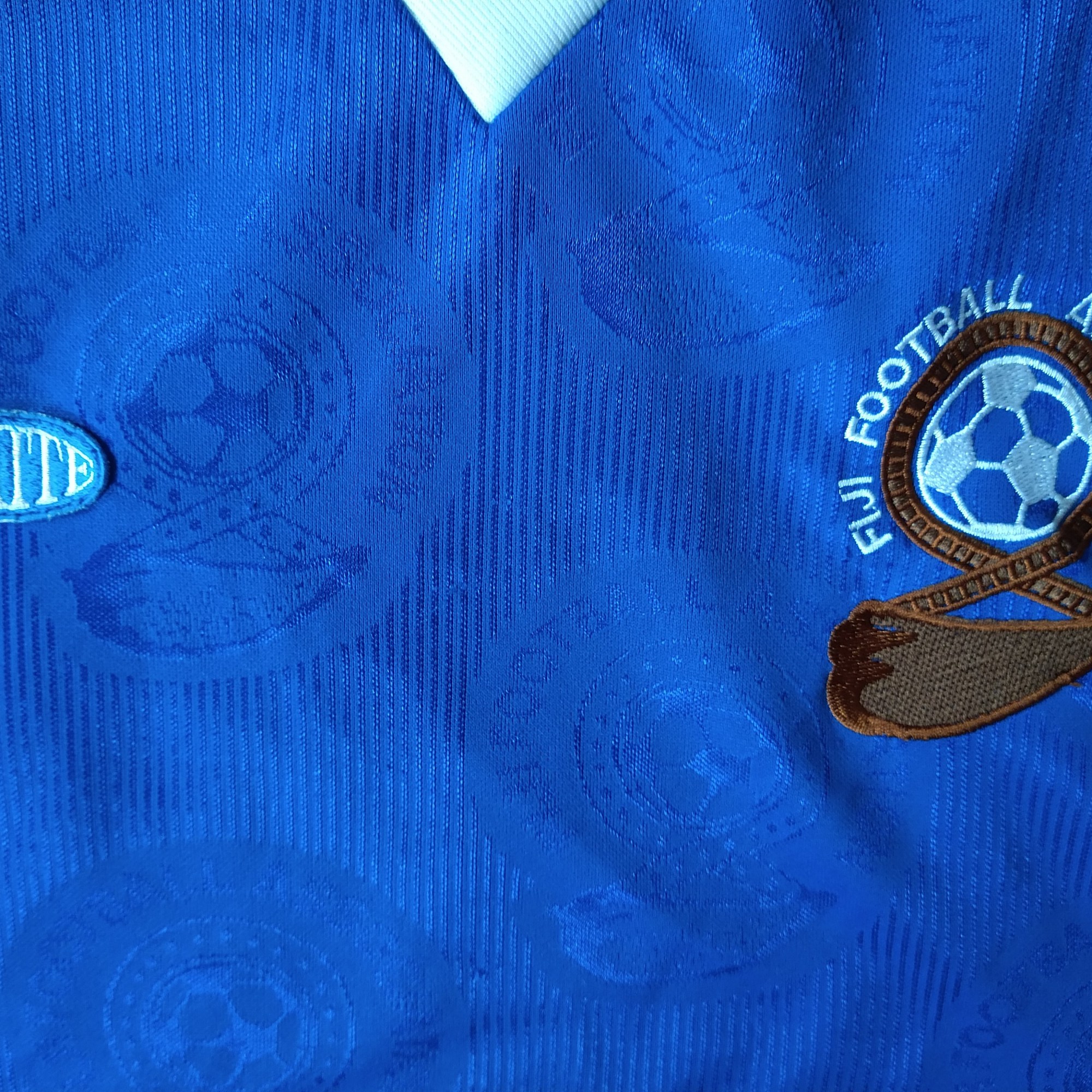
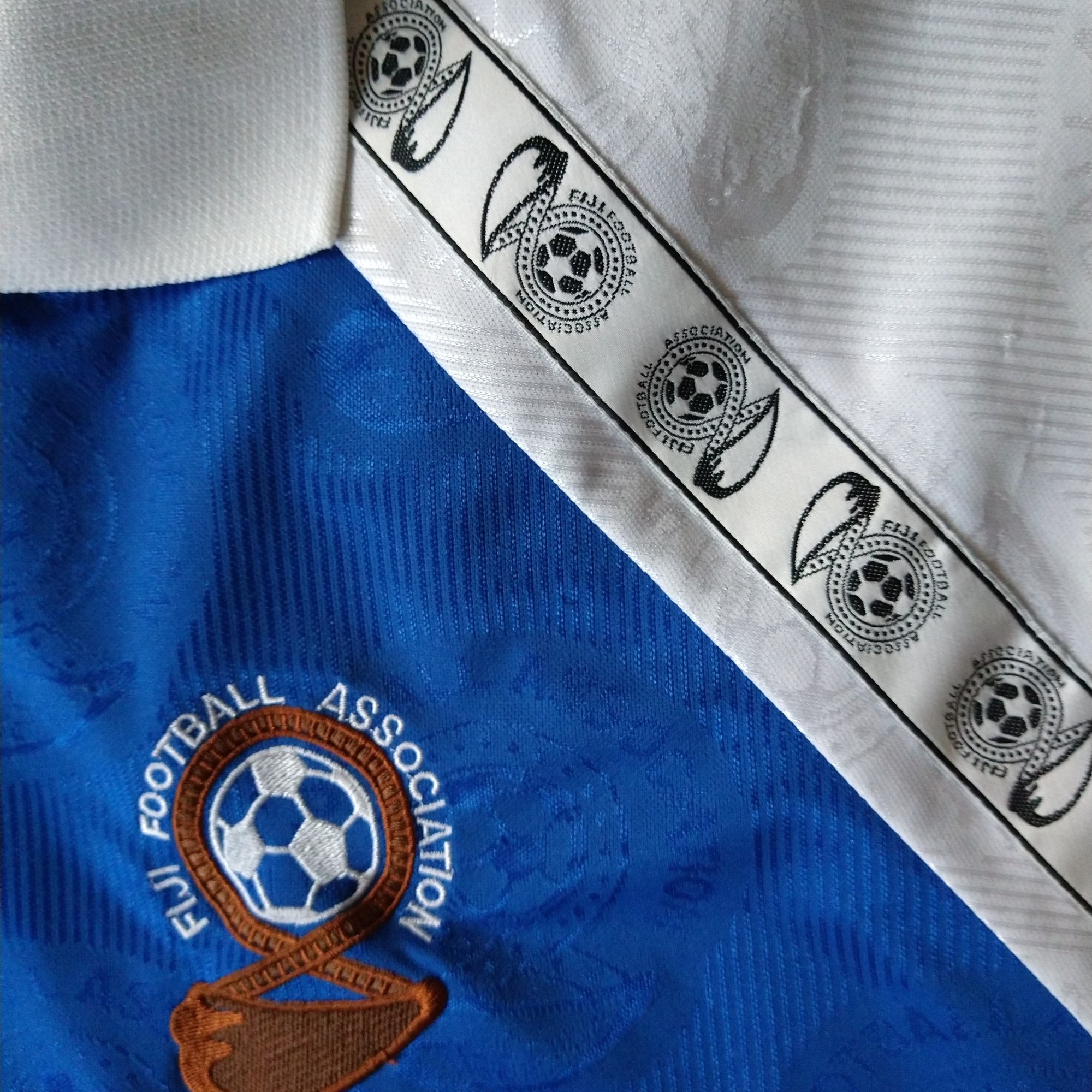
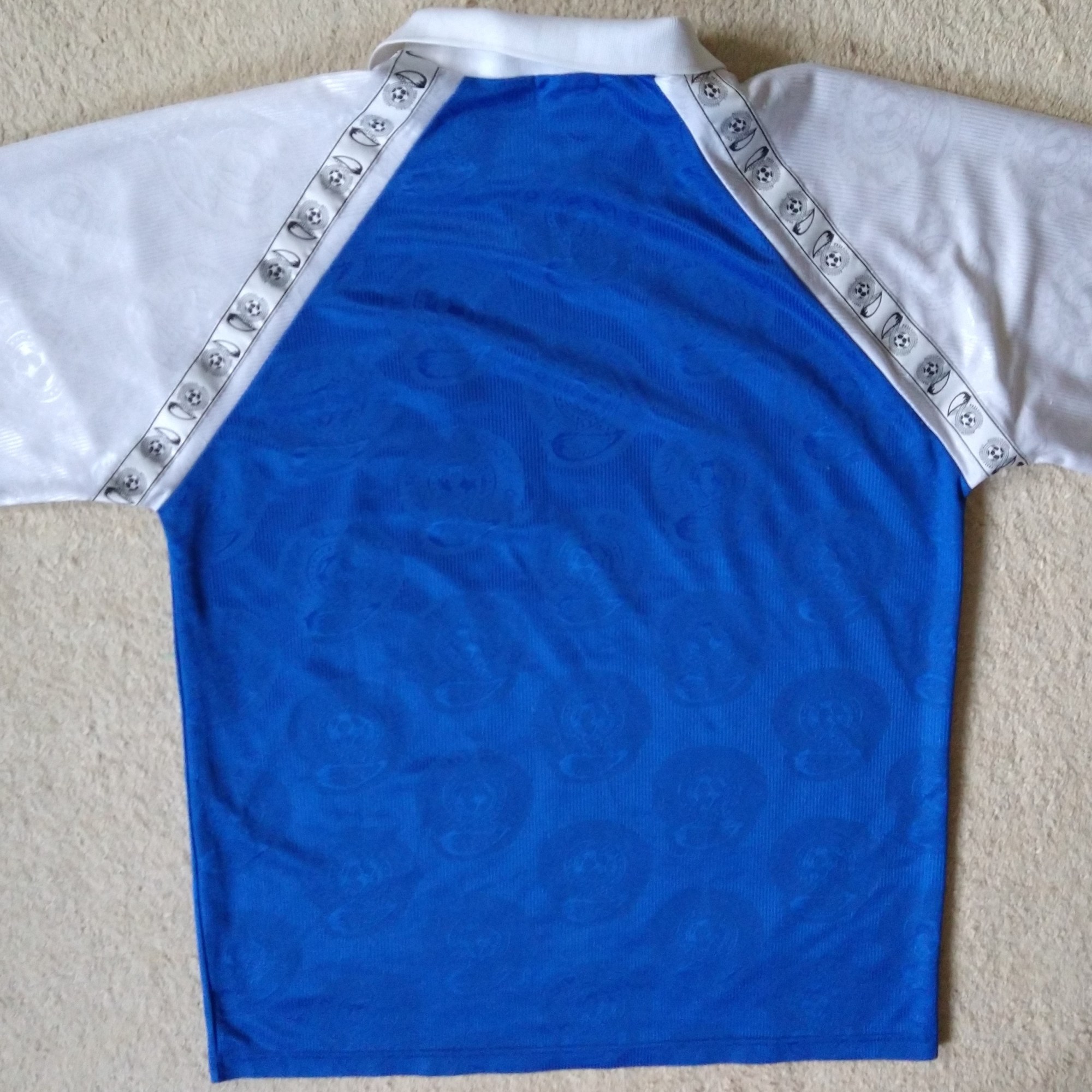
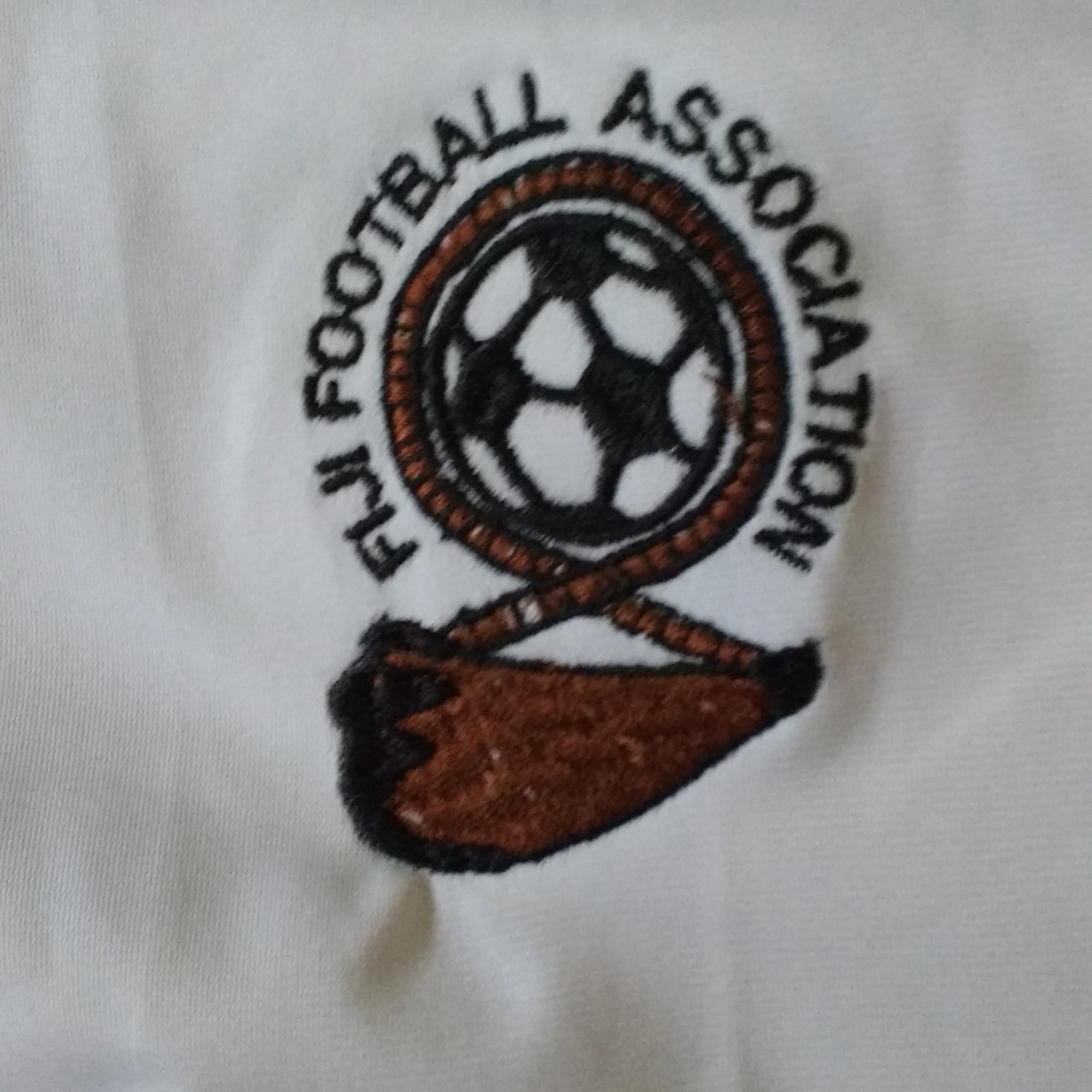
Am I absolutely sure this is a Fiji shirt? Fiji Football Association name and logo printed into the fabric across the whole shirt, embroidered onto the front and all across the stripes at the start of the sleeves. White really wanted you to know it was a Fiji shirt. Additionally, unlike a lot of Fiji shirts which are a full plain colour, we have the lovely traditional deep blue of the away contrasted nicely by the white sleeves. This shirt really works. OFC nations tend to have one or two spectacular shirts across their history and this is very much Fiji’s.

The travesty is that this shirt was only used for such a short time. Used across the 2002 World Cup qualifiers, Fiji recorded comfortable victories over Tonga, Samoa and American Samoa, scoring 27 and conceding only 2. Australia proved to be a different challenge though, delivering a 2-0 defeat to prevent Fiji from facing New Zealand for the play-off spot.

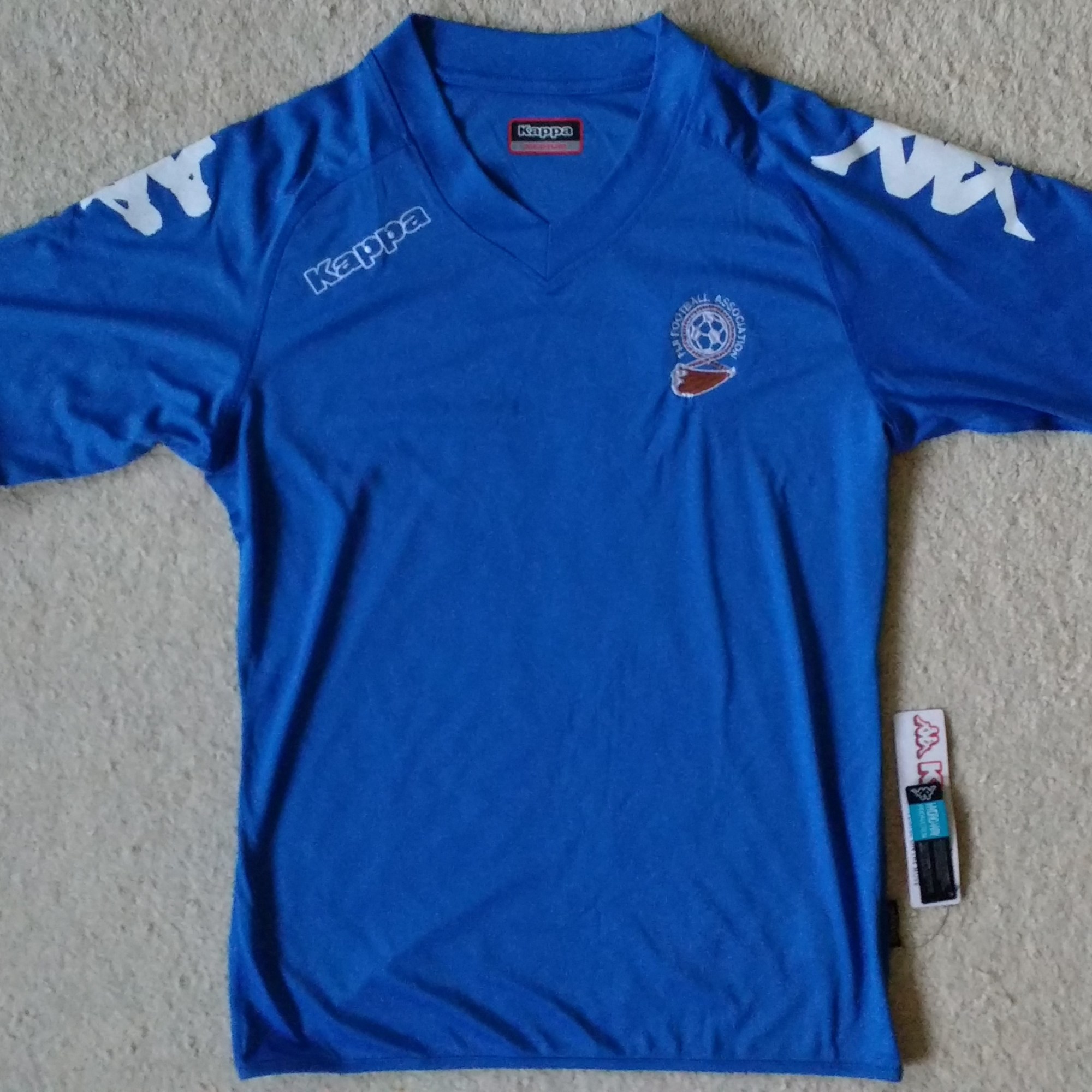
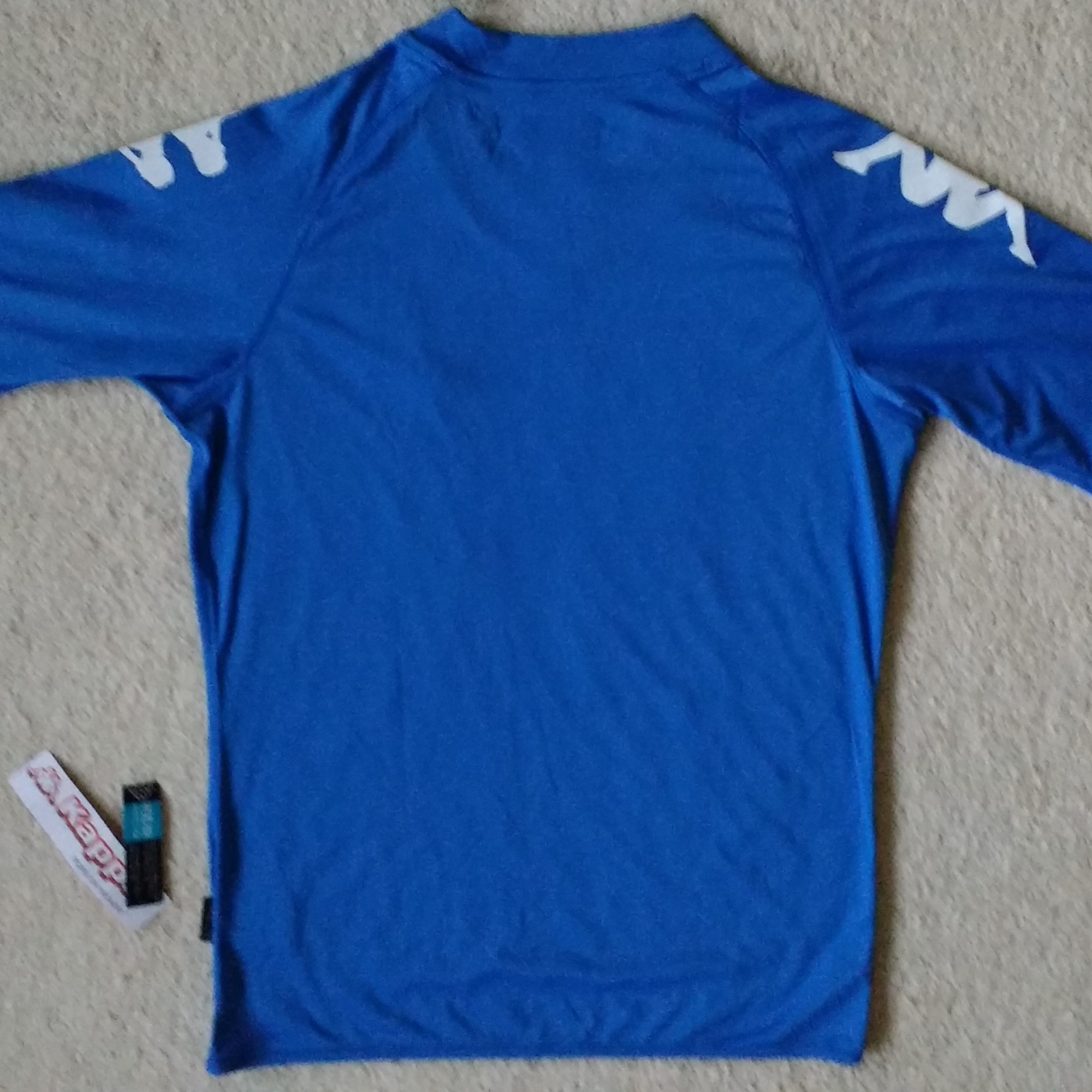
From the spectacular to the standard, these Fiji shirts have the logo nicely embroidered but otherwise are completely plain with just the Kappa logos on the sleeves. There’s really nothing here, and that’s such a shame considering what there is to work with. But Fiji shirts don’t grow on trees and these are welcome in my collection.

Used across a long period of time, these Fiji shirts saw action in the 2016 Nations Cup, the 2017 Pacific Mini Games, the 2019 Pacific Games along with numerous youth and women’s tournaments. They were eliminated in the group stages of the Nations Cup, losing 3-1 to New Zealand and 3-2 to Vanuatu but beating the Solomon Islands 1-0. This was enough to eke them through the the 3rd round of 2018 qualifying on goal difference but New Zealand and New Caledonia took ruthless advantage of their shakiness and a 2-2 home draw to the New Caledonians proved to be their oinly point from the 4 games, losing 2-0 twice to New Zealand and 2-1 away in Nouméa.

With 5 titles from the 7 Melanesian Cups, Fiji are traditionally the powerhouse of the Pacific islands. The step up to Australia and New Zealand has almost always been a step too far but otherwise they’ve been a major force. Twice 3rd in the Nations Cup and twice 4th, they’ve struggled a little more in recent years. In the pacific Games though, they’ve had two gold medals, four silvers and two bronzes, only struggling really far back in their history. Similarly, in the Pacific Mini Games they’ve earned 2 silver medals from the 3 games.

Women’s football is a little quieter for Fiji, but they’ve still shown their mettle. Three bronzes medals from 5 Pacific Games along with a silver from the only Mini Games tournament proves their credentials in a way that their early Nations Cup appearances can’t. 1983 and 1998 were a miserable time for them (1998 prolonged by their defeat of Samoa sending them into a 17-0 semi-final defeat to Australia and a 7-1 3rd place play-off defeat to Papua New Guinea). 2010 brought a solitary draw, but narrow scoreline and 2018 showed some of those Pacific Games credentials! Sent through qualification, they dispatched Vanuatu and American Samoa, stumbling briefly in a draw with the Solomons, before beating the Cook Islands, hammering Tonga and getting battered 10-0 by New Zealand. A 5-1 victory against Papua New Guinea sent them into a rematch with the Kiwis where the scoreline was reduced to 8-0 in a respectable 2nd place, but still very much 2nd. Youth football has seen some successes, with Fiji reaching the 2016 Olympics after New Zealand’s elimination, and regularly being the team just behind them beforehand. At the U20 level they’ve take a few points off New Zealand and have a string of top 4 finishes (including a 2014 title without New Zealand there), beating Honduras 3-0 at the 2015 U20 World Cup. At the U17 level they have a few top 4 appearances but haven’t quite lived up to the same billing. While otherwise quiet, they also have 2 semi-final appearances at women’s U17 level as well as a 2nd place at U20 level, all recently.

After initial success, with three 2nd places in 6 tournaments, Fiji dropped off the futsal radar a little, not attending two of the subsequent Nations Cups and finishing middle of the pack when they did. They’ve not been to a World Cup. Even more anonymous in beach soccer, they only showed up in 2009 and 2011, not winning a single game. Standard football is very much more their forte.

Without 2022 World Cup qualification having a defined format, it is hard to tell how Fiji will perform. The FA aim is to compete, with a target of securing the play-off spot for 2026. Some slightly shaky form in 2019 will concern them, but expect Fiji to press New Zealand to the best of their ability. Unlikely that a shock will be on the cards but let’s wait and see.

Namibia

Namibia 2012-13 Home
Namibia 2019-21 Home
Namibia 2021-23 Home
Namibia 2021-23 Away

Sometimes the inspiration for a football shirt design is unclear, sometimes it is not. Here, Puma took 1 look at the Namibian flag, saw the Sun in the top left and went all out on that alone. At least, that’s my assumption of what happened. The sleeves and rear of the shirt are plain, the older FA logo is cool, but rather understated and that’s really all there is. But the endlessly tiled Sun pattern makes for a cool enough shirt. I’m not going to call it revolutionary, but I like it.

Used across the later stage of 2014 World Cup qualification and all of the 2015 AFCON qualifiers, the latter did not go well. Namibia won 1-0 at home but Congo knocked them out immediately with a 3-0 in the away match. For the world Cup, drawn against Nigeria, Malawi and Kenya, the Namibians were not expected to compete for the play-off spot from 1st place. They didn’t, with 1-0 away losses to Nigeria and Kenya, a 0-0 away draw to Malawi to make up for a 1-0 home loss, a 1-0 home win against Kenya and an impressive 1-1 home draw to Nigeria. It left them bottom, and yet only 2 points from 2nd. Not great, but not terrible.

Next up, another calm, frontal design. Either based on the waves of the sea across their vast coastline or the vast sand dunes that make up much of said coastline. All rather relaxing, really. Also extends nicely to the edge of the shirt, without any strangeness around the collar like in the previous shirt. The cut-up Umbro logo makes for an interesting shoulder pattern and the striking eagle a more dramatic FA logo. The rear of the shirt remains plain, but there is, at least, a Namibian flag. Another decent shirt.

The design debuted in the 2019 AFCON, where Namibia faced a brutal group with Morocco, Ivory Coast and South Africa. A late own goal led to a 1-0 loss to Morocco, a result which was replicated in the match against South Africa. The Ivory Coast match was their chance to sneak through in 3rd, but they lost 4-1. While they did manage to claw it back to 2-1, 2 late goals undid them. Not an unexpected set of results, all things considered, but they’ll feel hard done by to have got no points.

Now here’s a wild one. Let’s get one thing out the way first though, yes the back of the shirt is completely plain. But the front, woah. For the home, we’ve got a stylised paint stripe in the colours (and order) of the flag coming down off the right shoulder across the Umbro logo. The flag itself moves from the rear of the shirt to front and centre and the FA logo, while the same as before, has a giant cousin fading away as you go down the shirt. Throw in some sort of camouflage style stripes across the top half and you’ve got quite a shirt. The away uses the stylised stripes more prominently and simplifies things with just a camouflage style pattern all down the front. Both are pretty great.

Used across 2023 AFCON qualifiers, Namibia gained a huge boost with Kenya’s suspension, leaving them requiring only 2nd place from a group with Cameroon and Burundi to qualify. A 1-1 draw at home to Burundi was a worrying start but their 1-1 away draw and subsequent 2-1 home win against Cameroon were huge results and qualified them there and then despite losing 3-2 in Burundi. An excellent achievement, albeit one tempered by some shaky results and Kenya’s ban.

Usually a middling side in Africa, Namibia have a few results to their name but don’t often stand out. They’ve never particularly threatened a World Cup qualification, but typically take a few positives results home with them regardless. Their AFCON record comes out somewhat better with a respectable 4 tournament appearances from 15 qualification attempts. The only possible disappointment is that the latest qualification didn’t match up to the 10 year pattern of the previous ones. 1998 and 2008 brought a draw and 2 losses, while 2019 was the first AFCON where they scored no points. 2023 has started off considerably more impressively, grabbing their first ever win in the tournament. Namibia started off the COSAFA Cup excellently with two runners-up and a 4th place finish in the first 3 tournaments! Since then they’ve struggled to live up to the early days with mostly round 1/group stage exits. 2015 and 2022 brought them back to glory though, with them taking the 2015 title and an extra time final loss in 2022 to Zambia. They’ve also managed 2 CHAN appearances, including a quarter-final, but otherwise are fairly limited in that theatre. Rarely the best side but similarly rare for them to be the worst.

The record of their women’s team sits a little worse, but otherwise relatively similar. They’ve been one 2-legged match from a WAFCON a few times, losing the 2022 matchup on away goals only, but also have a few withdrawals after one-sided results. 2014, however, saw them host the WAFCON and therefore debut. They opened up with a 2-0 win over Namibia but followed that up by conceding late goals to lose 3-1 to the Ivory Coast and lost 2-0 to eventual champions Nigeria. In COSAFA they’ve never registered 0 wins, but only once escaped the initial stage, coming runners-up in 2006. Men’s youth football has been a little less successful than the senior team. The U23 side have never threatened Olympic qualification, not qualifying for an U23 AFCON to date. The U20 side managed to just about qualify for the 2021 AFCON, taking a draw from the CAR but otherwise losing their other matches to get sent home. Otherwise, the U17s match the U23s in failing to qualify for any AFCON. Again there’s a little more success in COSAFA, with 2 runners-ups (2010 and 2020) at U20 level and a penalty shoot-out title in 2016 at U17 level. Their women’s sides tend to take part, but rarely progress, with the U17 side being a little more 50-50 on participation. COSAFA tournaments are much rarer, but results have been closer, the disastrous 2022 U17 tournament excepted.

While Namibia have no history in futsal, they are set to try and qualify for the 2024 futsal AFCON as their formal debut in the sport. Despite their abundance of coastal sand, they’ve never tried out beach soccer to date either.

Not expected to qualify for the 2022 World Cup, they were drawn in the preliminary round. Eritrea were fairly readily dealt with to take them to a group with Senegal, Togo and Congo. Hardly believed to compete for the play-off spot for the group winner, they competed reasonably with Togo and Congo while Senegal ran off into the distance. 3rd place is neither overly impressive, nor too bad, just as they tend to do. Good enough.

Mauritania

Mauritania 2013 Away
Mauritania 2019-21 Home

So, we have ourselves a classic Adidas template, this sort of cut away of a mountain peak design across the front and top of the shirt. The deep green of Mauritania works pretty well here, though the white main body of the shirt clashes somewhat with it. Might work better with yellow? But that’s all there really is to it, not one of the greater examples, mainly notable for the unusual colour.

Mauritania’s relationship with kits is somewhat fragmented, with a lot of variety in short spaces of time. Their relationship with photographs is also fragmented, but more in the sense that there don’t seem to be many of them. They definitely used it in a series of 2013 friendlies wherein they drew 0-0 with Canada and Oman and beat Canada 1-0 but that is possibly the limit of its use. Hardly a staple of their history.

In contrast their AB Sport shirts are more stable and well known. Fading yellow camouflage stripes across the front, a subtle red pattern across the shoulders and rear of the shirt, some red accenting and what looks like “Mauritania” in Arabic written on the sleeve cuffs and rear of the collar. There’s detail to it, it stands out and is fairly definitively Mauritanian. Can’t ask for a lot more than that, though material quality isn’t great. Good shirts, particularly considering how template-y they’d previously been.

Designed for their AFCON debut in 2019, Mauritania would be drawn in a group with Mali, Tunisia and Angola. An opening 4-1 defeat to Mali was a chastening start to major tournament life, but they managed to recover with two respectable 0-0 draws to finish off their group stage. It wasn’t enough to lift them off of bottom place, with gaol difference consigning them there, but it was a solid first attempt.

Mauritania’s footballing history is somewhat messy, with a wide range of tournaments and very much mixed participation. For instance they first entered World Cup qualification in 1978 but then didn’t do so again until 1998! Their record in World Cup qualification is dismal, with very few wins, typically exiting in the 2 legged knockouts CAF favour. AFCON qualifiers also play the “did not enter” and “withdrew” game a lot. Often not brilliant there either, their recent form has been much better, leading to 3 AFCON qualifications in a row! Yet to register their first win at a finals, this is still a positive sign. They’ve managed 3 CHAN qualifications without major impact and turned up to 2 WAFU Nations Cup with similar lack of impact. Their Arabian tournament performances have been very spotty and similarly unspectacular. Their main historic positives come from the old Amílcar Cabral Cup, with two 4th place finishes in the 1980’s and even a penalty shootout final loss as they hosted it in 1995. A title eluded them, however.

Very new to women’s football (2019), Mauritania are yet to win or draw a match. They’ve taken part in a friendly tournament against primarily youth sides in Spain, the 2020 UNAF Tournament, a WAFU tournament and WAFCON qualifiers without success to date. Not exactly a household name yet, hopefully things will improve, with some narrow results showing a little promise. Men’s youth football is as spotty as the senior side, with several withdrawals and non-participations. They’ve never formally qualified for a youth AFCON, often getting knocked out at the first hurdle, but did debut in the 2021 AFCON as hosts. Narrow losses to Uganda and Cameroon, along with a win over Mozambique proved insufficient to progress any further. They’ve had a few results in UNAF, with a 2nd and 3rd at U19/20 level and one of each of 1st-4th at U16/17 level. Their sole U15 appearance is best left unmentioned. They’ve never played a women’s youth international to date, always withdrawing before doing so, but being involved in the draw shows it should only be a matter of time.

They’ve never played beach soccer or futsal to date, but are set to debut in futsal in 2024 AFCON qualifiers. Only time will tell how that goes.

Drawn in a group with the reasonable sides of Tunisia, Equatorial Guinea and Zambia, Mauritania were expected to struggle. They did so, managing respectable home draws to Tunisia and Equatorial Guinea, but losing their other 4 matches to leave them with only 2 points. AFCON remains their highlight…

Design a site like this with WordPress.com
Get started