
Montserrat 2017-18 Home


Montserrat 2017-18 Home

Montenegro 2010-11 Home


Mongolia 2018-20 Away


Meixco 1996-98 Home Matchworn Claudio Suárez 1996 Gold Cup Final
Mexico 2018 Home
Is there a more iconic football shirt? Known across the planet, this design, based on the Aztec calendar, almost defines Mexico shirts. It is a little bit bonkers, the whole front and rear covered in Mesoamerican design with the manufacturer’s name tessellated across it. Collar is plain but the sleeve cuffs have some minor detailing too and all the logos and numbers are felt (except for Mexico which is printed).
The design was subtly altered for the 1998 World Cup, this style of shirt being used in the 1996 Gold Cup and 1998 World Cup qualifiers. Mexico’s record cap holder Claudio Suárez wore this shirt in the 1996 Gold Cup final, where they beat Brazil to take the title, after beating Guatemala twice and St Vincent and the Grenadines. They qualified for the 1998 World Cup by getting through the final round as group runners-up (away losses in Honduras and Jamaica) but didn’t lose in the final round to top the group and qualify (4 wins, 6 draws).
Feels anticlimactic to move onto this shirt now, but it is nice. Jagged divide across the chest adds some style to the shirt and helps split up the different greens. There are a lot of colours across this shirt but they all work. While the split helps to highlight the FA logo, everything being centralised is annoying. Stripes across the front and a multi-coloured stripe across the back help to add to all the detail and colour.
Shirt was used in the 2014 World Cup, where two late goals from the Netherlands knocked them out in the Round of 16 after victories against Croatia and Cameroon along with a draw against hosts Brazil in the group stages.
The Mexican men have been at 16/21 World Cups, reaching the round of 16 in every World Cup since from 1994. They were banned from the 1990 World Cup, for using over-age players in youth tournaments. In the 1970 and 1986 World Cups they reached the quarter-finals, the furthest they’ve reached. From 24 Gold Cups they’ve won 11 titles from 22 appearances (banned and withdrew from 2), more than any other nation, last not reaching the semi-finals in 2005. From being invited to the Copa América they also have 2 runners-up and 3 further semi-finals.
The Mexican women’s side enjoys less dominance in the region, but still has 2 runners-up and 4 third place finishes to their name, reaching the group stages of 3 World Cups and the quarter-finals of the 2004 Olympics. Further achievements include a runners-up and 3 third places at the Pan American Games and both titles they’ve competed for in the Central American and Caribbean Games. 2 third places in the Cyprus Cup accompany a handful of middling Algarve Cup appearances. If anything their youth teams are even more successful than the senior sides, with titles including the 2012 Olympic Games, 1997 U20 World Cup runners-up, 2011 U20 World Cup third place (and 13 CONCACAF titles, 11 more than their closest competitor), 2 U17 World Cups, 2 U17 World Cup runners-up, 8 U17 titles and 1 U15 title. The women have been to 8 of 9 U20 World Cups (also qualified for 2021), have an U20 title, three 2nds and four 3rds, four U17 CONCACAF finals and 5 U17 World Cups (runners-up in 2018). They are just a team that win titles.
In comparison futsal has been a disappointment, with three 4th places and one 3rd leaving them with a single group stage appearance at the 2012 World Cup (3 losses). They’ve been to 6 of 10 beach soccer World Cups, finishing 2nd in their debut in 2007 but only escaping the groups once otherwise. They have won 4 CONCACAF Beach Soccer Championships, finishing in the top 4 every time. Even when disappointing, they’re a force to be reckoned with.
Fully expected to qualify for 2022, they’ll be looking to make the quarter-finals and break their Round of 16 streak. Nothing less than knockout football will be expected though, the pressure will always be on, particularly in the cup before they partially host it.


Maldives 2012-13 Home


Malaysia 2011-12 Home


Lithuania 1992-93 Home, matchworn/prepared for Arūnas Mika?
Lithuania 2000-01 Home, matchworn/prepared
Lithuania 2006-09 Home, matchworn by Saulius Mikoliūnas v Italy, 2008 ECQ
Lithuania 2006-09 GK, match-issue Paulius Grybauskas v Romania
Lithuania 2009-10 Home, matchworn? v Latvia, 2010 Baltic Cup
Lithuania 2013-15 Home, benchworn Vytautas Andriuškevičius v Latvia
Lithuania 2016-17 Home
Lithuania 2018-19 Home
Lithuania 2021-22 Home, matchprepared Gratas Sirgėdas v Latvia
Oh yes. Everton and Chelsea fans may recognise this old Umbro template, with the asymmetrical jagged stripe across the front. There are also arrow shapes around the line, made up of horizontal stripes, with the pattern repeated on the rear of the shirt and even partly on the sleeves! Add to that white and orange detailing on the collar and cuffs along well nicely patterned material and you’re really onto a winner. The very old badge of just Vytis, the White Knight on a proper shield pattern is the last thing it needs, with the red colour fitting in nicely with the shirt, just as with the green numbering. That does lead to the only strangeness of the shirt, why is it orange when Lithuania’s colour is yellow? Nonetheless, very much a superb shirt.
Used in their inaugural qualifying campaign after the breakup of the Soviet Union, Lithuania were drawn in a massive qualifying group. At home they did fairly reasonably, only taking a point off Latvia, but managing a win over Albania and even grabbing a draw against Denmark. Their losses to the two Irelands were by only a single goal and it was only 2-0 against Spain. However, away from home they suffered more. They gave Albania their only win of the campaign, conceded 11 without reply to Spain, Ireland and Denmark, only making up for those with a 2-1 victory over Latvia and a 2-2 draw with Northern Ireland. They finished 5th, best of the bottom three, but very much distant from 4th.
One of the later examples of a template that was inventive and used well, Lotto threw out an actually interesting effort for Lithuania here. There are green stripes down the front and curving across the sleeves. These help divide out yellow stripes on a white background that fades back into the main yellow of the shirt. Add in a green and yellow striped collar and giant black and white Lotto logos on the shoulders and you end up with quite the shirt. It may be a template, but it uses enough colour to be personalisable for each country that used it. Good shirt!
Nice as the shirt may be their 2002 World Cup qualification in it was very poor. They may have stunned everyone with a 0-0 draw against Italy late in the campaign, but their only other point was a 1-1 away draw in Hungary, meaning they lost home and away to Georgia and Romania. 2 matches were within a single goal, showing that things could’ve swung differently on the day but 3 matches were lost by 4 or more, including the home matches against Hungary and Georgia! Not really one to remember for them.
Are you seeing double? Not quite, these Saller shirts differ on their logo, which swapped in the middle of their contract. The old logo was dual layered and crenelated across the top. Definitely better than the transfer badges. In terms of the shirt itself, it is mainly yellow, with green collar and sweeping green accenting across it, keeping things fresh. Flag on the left arm, match detailing, they’re impressive shirts without breaking any new ground. Add to that, the typeface for the numbers flows beautifully and has the border around the outside. Decent shirts.
Additionally there’s this lovely little goalkeeper shirt from the same period. Mostly black, but with plenty of deep golden bronze panels across the entire shirt for a splash of colour, one not normally seen on shirts. These do seem to have forced the patches migration down the fronts of the sleeves for some reason, which is odd and the badge is unfortunately just a transfer too. Lastly, the numbers aren’t quite the right colour in comparison to the panels (or indeed each other, once #1?). A strange shirt, all in all, but a nice one that stands above the much plainer designs.
The old badge was used across Euro 2008 qualifiers, while the newer one came in 2009 for 2010 World Cup qualifiers. In Euro 2008 qualifiers they finished a point behind 4th place in a 7 team group. They lost home and away to France and Scotland, managed a stunning 1-1 away draw in Italy (but lost at home), traded wins with Ukraine and beat Georgia and the Faroe Islands home and away. 16 points left them 6 points clear of 6th but 10 points behind the qualificants.
In 2010 qualifiers their home form significantly outstripped their away form. They beat Serbia 2-1, Austria 2-0 and the Faroes 1-0 while taking single goal losses to France and Romania. However, away from home they only managed a 3-0 victory over Romania, taking single goal losses to France, Austria and the Faroes and a 3-0 loss to Serbia. They ended up in 4th, ahead of Romania on goal difference and 2 points behind Austria in 3rd.
Next up, a benchworn 2014 World Cup qualification shirt by the fantastically named Vytautas Andriuškevičius. Hummel typically make good shirts and, no matter how dodgy the deal was that linked Lithuania and Hummel, this is no exception. Match detailing, the felt patches and the numbers do help but the subtle patterning on the front (diagonal stripes into the classic chevrons) and the standard shoulder chevrons add to it. The black and yellow colour scheme also helps, though I wish they had name printing, if only to see how it would fit…
With Bosnia-Herzegovina and Greece only dropping 5 points across the 10 games, Lithuania were far from able to qualify for the 2014 World Cup in this shirt. Placing 4th out of 6, they took 6 points off Liechtenstein, 3 points off bitter Baltic rivals Latvia and managed impressive home and away draws against a Slovakia side that had been at the 2010 tournament. 2 points behind Slovakia in the standings, 3 points ahead of Latvia and a whopping 14 points off even the play-off spot, it was a competitive campaign but never going to be a successful one.
Next up looks plain but has an incredibly detailed front to it. The black rises to a position of prominence for this design and the classic chevrons move to the sides and turn silver. A bit starker a shirt and one that doesn’t quite work as well in my opinion. It is, however, still very nice and doubled up as their away GK shirt so was fairly versatile. As elaborate as the design is, it doesn’t seem to match any prominent Lithuanian symbols which is a shame but it is still nice.
Drawn in a tough group with England, Scotland, Slovakia, Slovenia and Malta for 2018 World Cup qualification, Lithuania endured a poor campaign. Starting off with 2 draws (against Slovenia and Scotland) and a win against Malta was good but a solitary 1-1 draw in their remaining 7 games proved disastrous. 9 points off even 4th place and only ahead of the Maltese (as well as being responsible for Malta’s only point) would not have been their ambition. That early draw with Scotland did help prevent them from getting a play-off spot though.
Then we have their Nations League kit. The chevrons return to the shoulders and we get some accenting down the side but they feel a bit cheap. There are two big bonuses. The first is the patterning around the sleeve cuffs and the bottom, which is colourful and presumably traditional. The second is the giant heat press knight on the front, though that can be hard to see. The home yellow shirt is a little nicer, being a little bit more colourful but both kits do pretty well.
This shirt was used during the 2018-19 Nations League, which was disastrous. Drawn in League C with Serbia, Romania and Montenegro, Lithuania lost every game, though two of their home games were only by a single goal. They scored 3 goals, conceded 16 over 6 games and two of their goals came in 4-1 losses (away to Serbia and at home against Montenegro). The only saving grace, besides some decent shirts, was that the total revamp of the format would prevent them from being relegated into League D so that they stay above Latvia and can dubiously claim to be on the same level as their other Baltic companions, Estonia.
Their latest shirt looks simple from the outset, but has a surprising amount of detail to it. The traditional chevrons aren’t even plain and the tops of the shoulders have a dotted pattern. Green detailing on the sleeve cuffs, collar and sides help keep it from being plain and the new logo is complemented by a massive version of it, heat-pressed into the front. Even the Hummel logo is 3d. It may be a very plain design, but it does a fair amount to stand out.
So far this design has only been used in the 2021 Baltic Cup, where Lithuania lost both games, and in 2022 World Cup qualifying. Narrow losses to Italy (2-0 at home), Switzerland and Bulgaria (both 1-0 away) show that there is something there, but a 4-1 home loss to Northern Ireland and their only points coming from a surprise win against Bulgaria show that they have some distance to come. They’ve not shown enough and results have not been kind.
Recent results excluded, Lithuania have tended to be one of the better low tier sides in UEFA. They threatened the play-off spots for the 1998 World Cup, finishing 1 point short, but typically compete for 4th place in a group of 6. It is very rare for them to finish bottom, though it has happened twice, but success is equally rare. Aside from their initial, terrible, Nations League season, their second season was middling, allowing them to hold position in League C. The Baltic Cup has provided a better platform, competing against Estonia and Latvia (and twice Finland) where they’ve won 10 of the 27 tournaments. They last won it in 2010, where they retook the lead for the most victories. Since then, they’ve dropped off a little and have lost their title lead to Latvia. They attended the 1924 Olympics, getting annihilated 9-0 by Switzerland and failed to qualify for the 1934 and 1938 World Cups, losing to Switzerland and Lithuania respectively.
The women’s team showed up briefly in the 90’s, got annihilated, and returned in 2009 to compete in preliminary rounds. They still don’t win regularly, but typically aren’t the worst team in the preliminary groups and can grab a few draws here and there and a win every so often. In 2021 they won their 5th Baltic Cup, of 21 tournaments to date but they annihilate everyone in 2nd places at 13, which is the tiebreaker that now puts them ahead of Latvia and behind only Estonia. They aren’t very good but what do you expect from a team that managed to lose 17-0 to Scotland in 1995? Suffice to say, they’ve improved. The younger male youth teams have a handful of elite round appearances but the U21s most consistently emulate the senior side in being very middling. The U19s did host (and therefore debut) at the 2013 U19 Championship though, where they lost all their games fairly narrowly. All of their Baltic Cup results were fairly unspectacular too. The women’s youth teams do not regularly succeed but somehow hosted the 2018 U17 Championship where their narrowest loss was 4-0. Women’s youth Baltic Cup results are tricky to find but I doubt they’ve been too different.
Beach soccer isn’t a popular sport judging by 3 wins from 25 games but they have largely only just gotten started, with the majority of their games coming since 2017. Futsal is much more popular with them competing more regularly, albeit not much more successfully. 1 victory (and six 2nd places) in the 9 Baltic Futsal Cups shows their level and their qualification campaigns have gone fairly similarly, rarely competing for the top spot but typically not being the worst. They will host the next World Cup though and therefore debut at the tournament they’ve otherwise not really threatened to appear at.
Their recent results were extremely poor so they were expected to only compete only at the bottom in qualification for 2022. Despite a possibly promising start, they fell well short of what was required to progress, or even to be kingmakers. A 3-1 victory at home against Bulgaria was a definite positive, but it would prove to be their only points from the entire campaign.


Lesotho 2012-14 Away


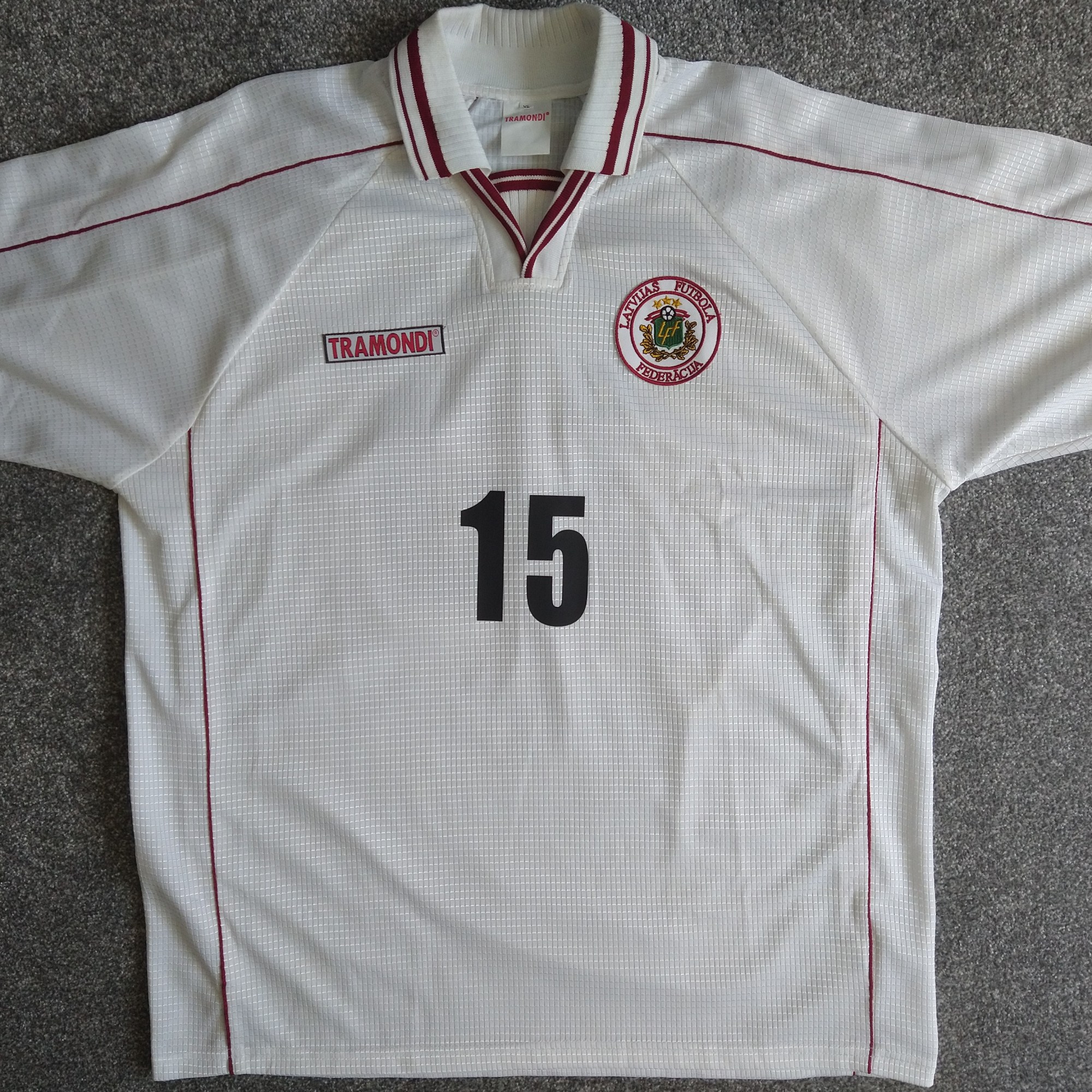


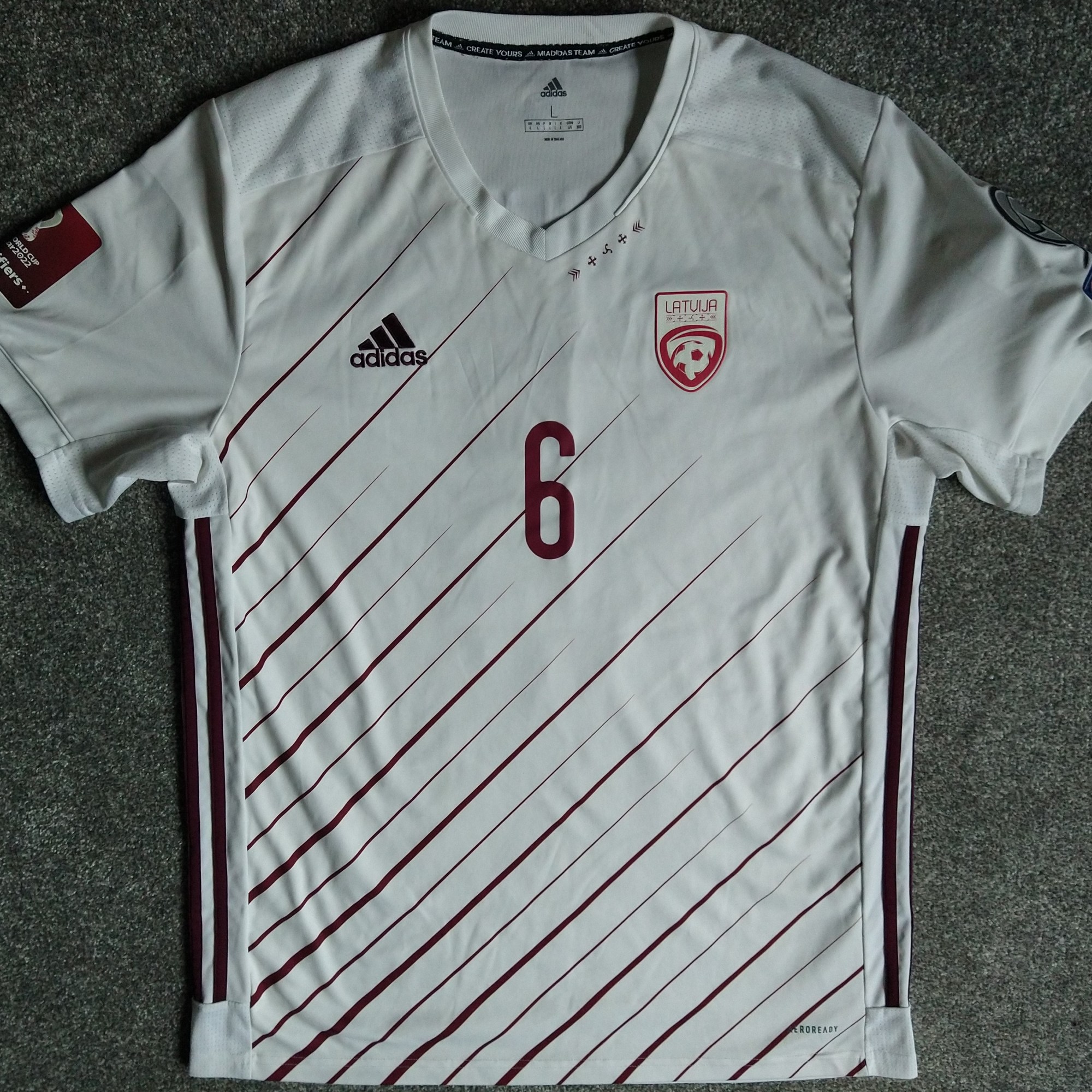
Latvia 2000-02 Home, matchworn v Luxembourg
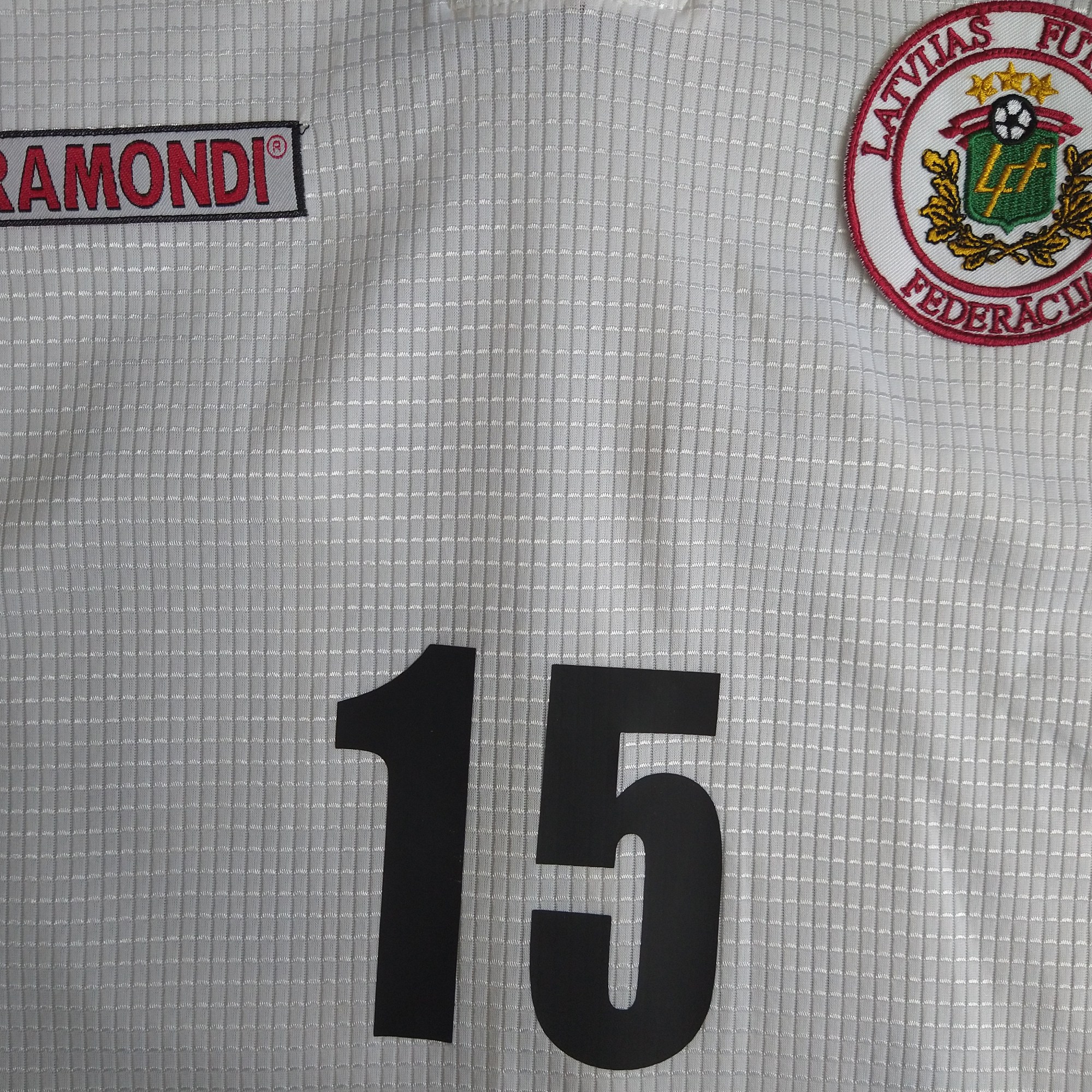
Latvia 2000-02 Away, matchworn/prepared v Scotland
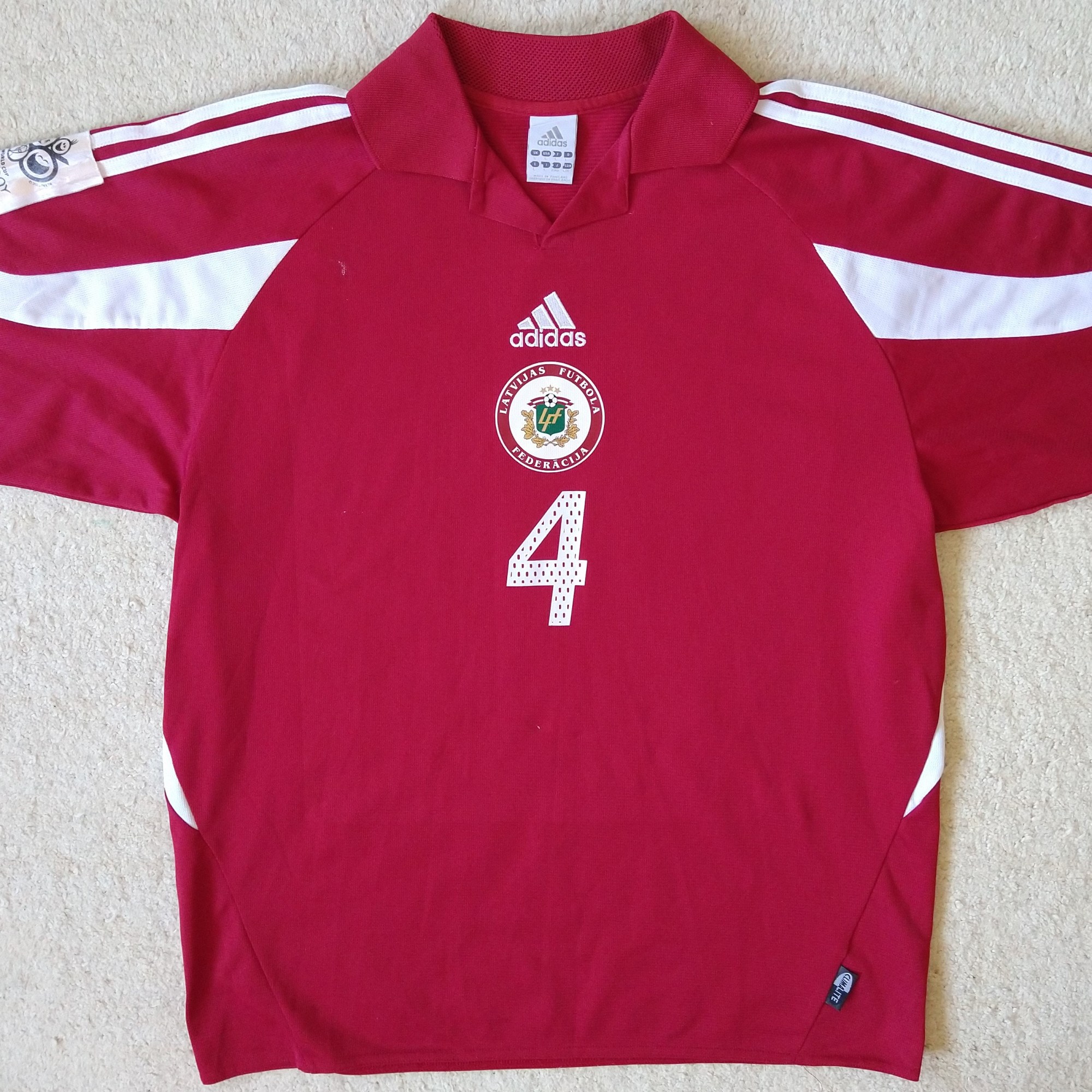
Latvia 2002-04 Home, matchworn Andrejs Štolcers v ?, 2003 Baltic Cup
Latvia 2004-05 Home, matchworn/prepared?
Latvia 2006-07 Home
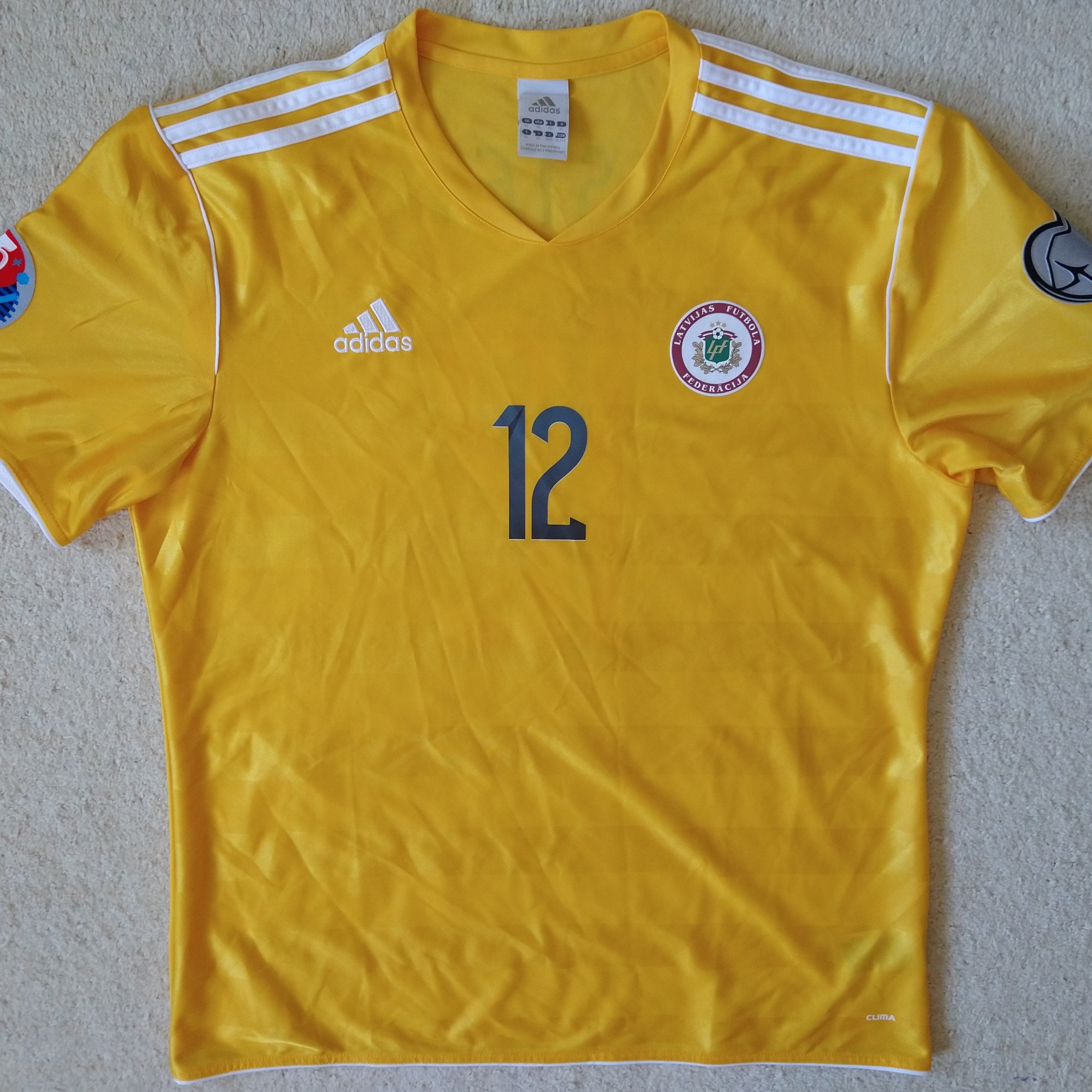
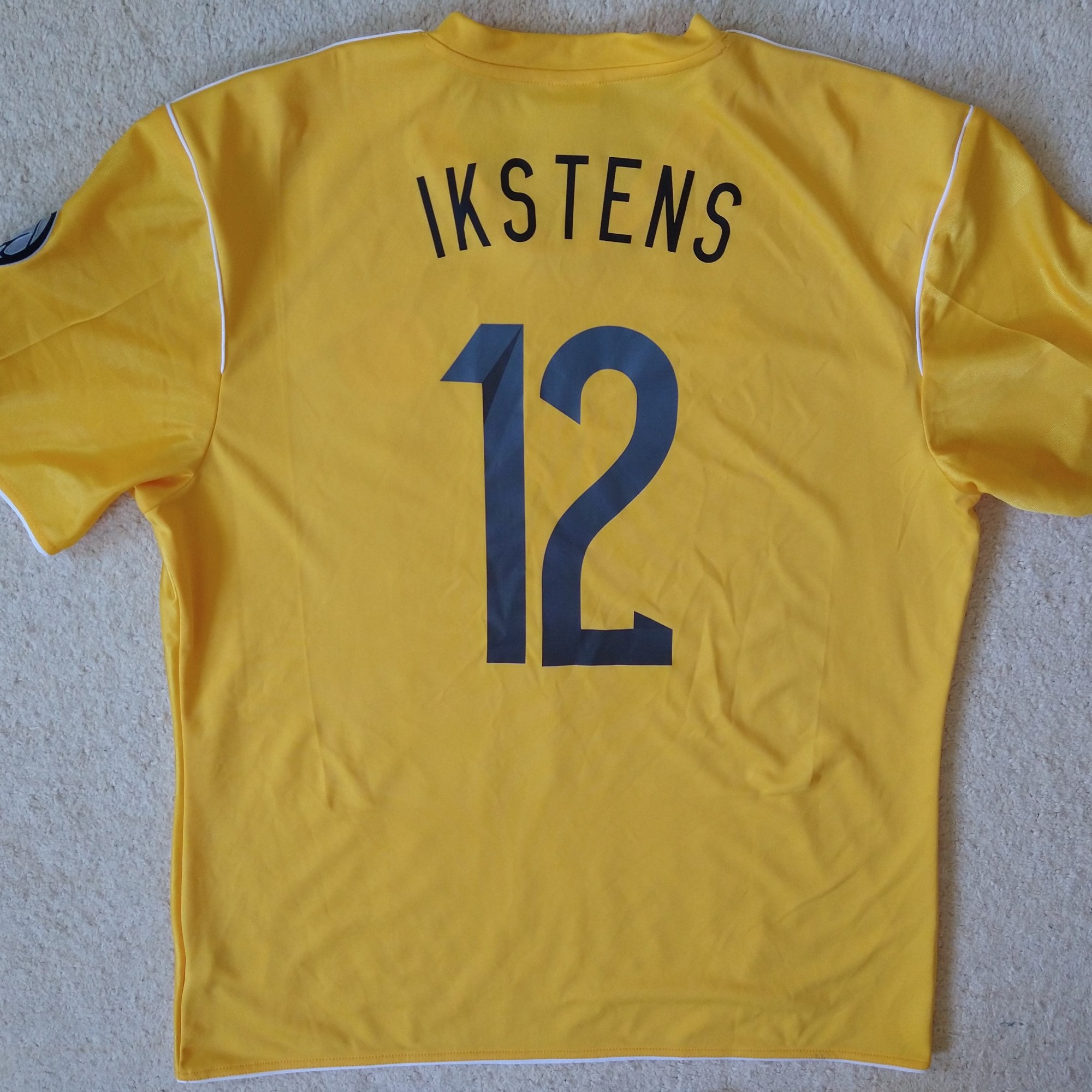
Latvia 2012-14 GK, benchworn Kaspars Ikstens v Czechia, 2016 ECQ
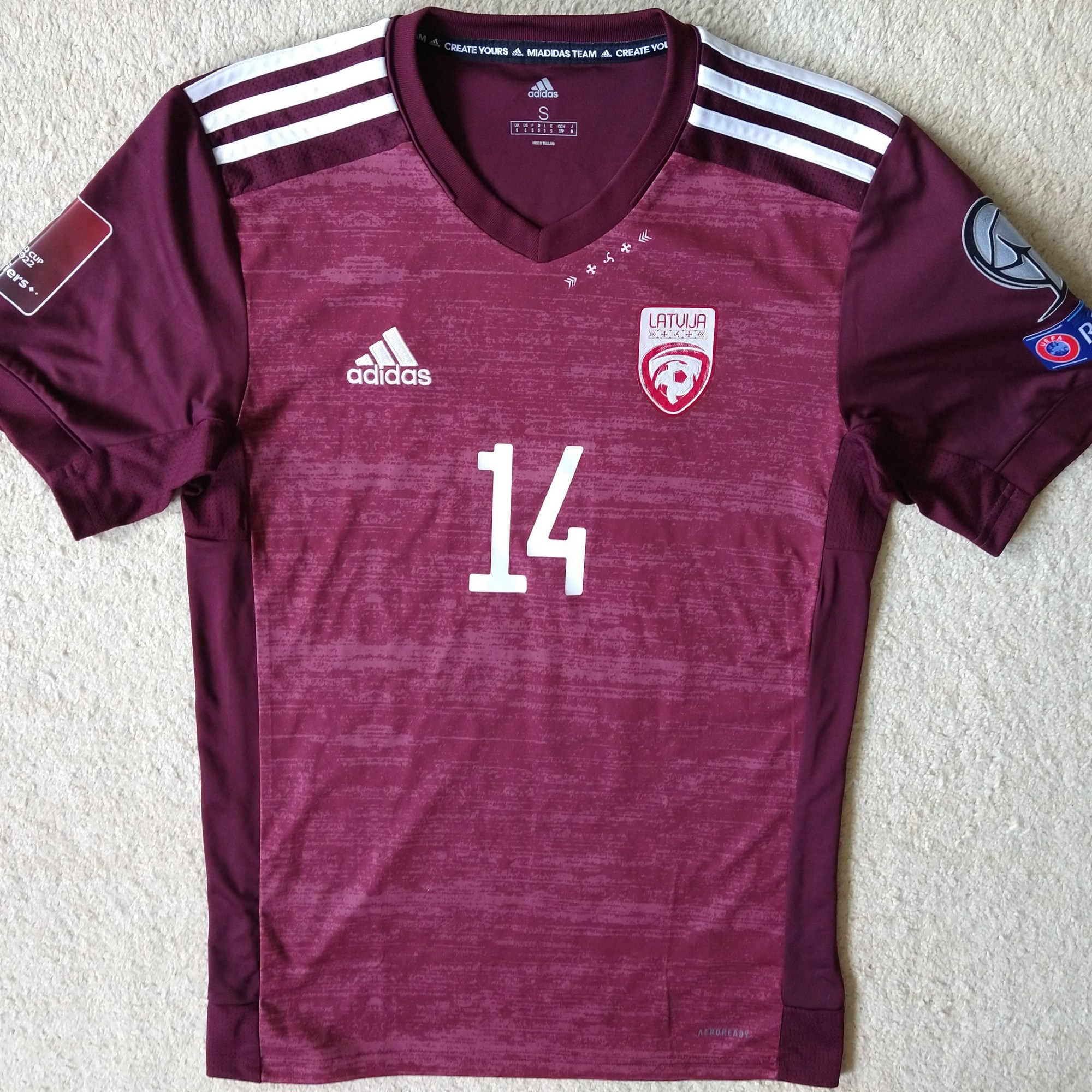
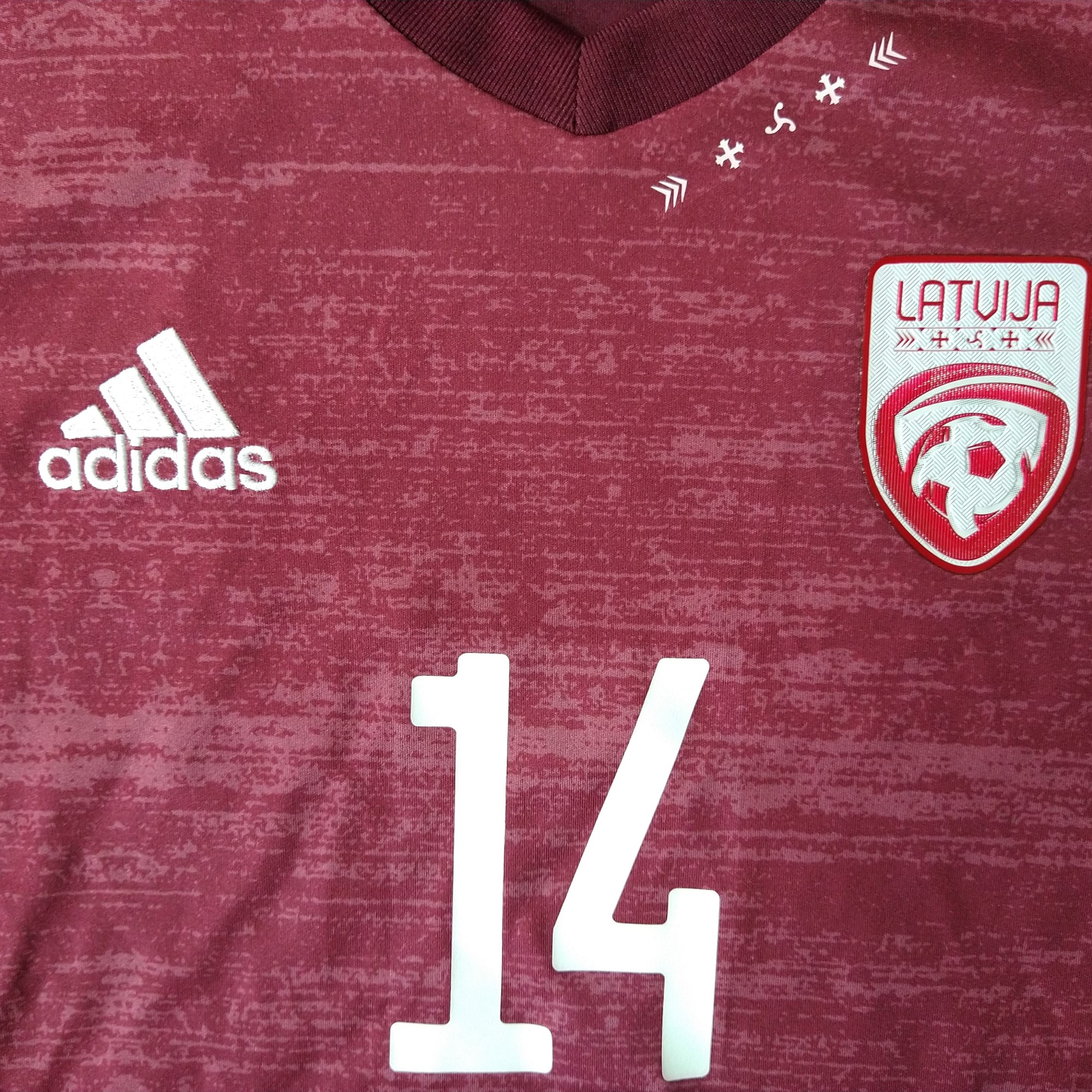
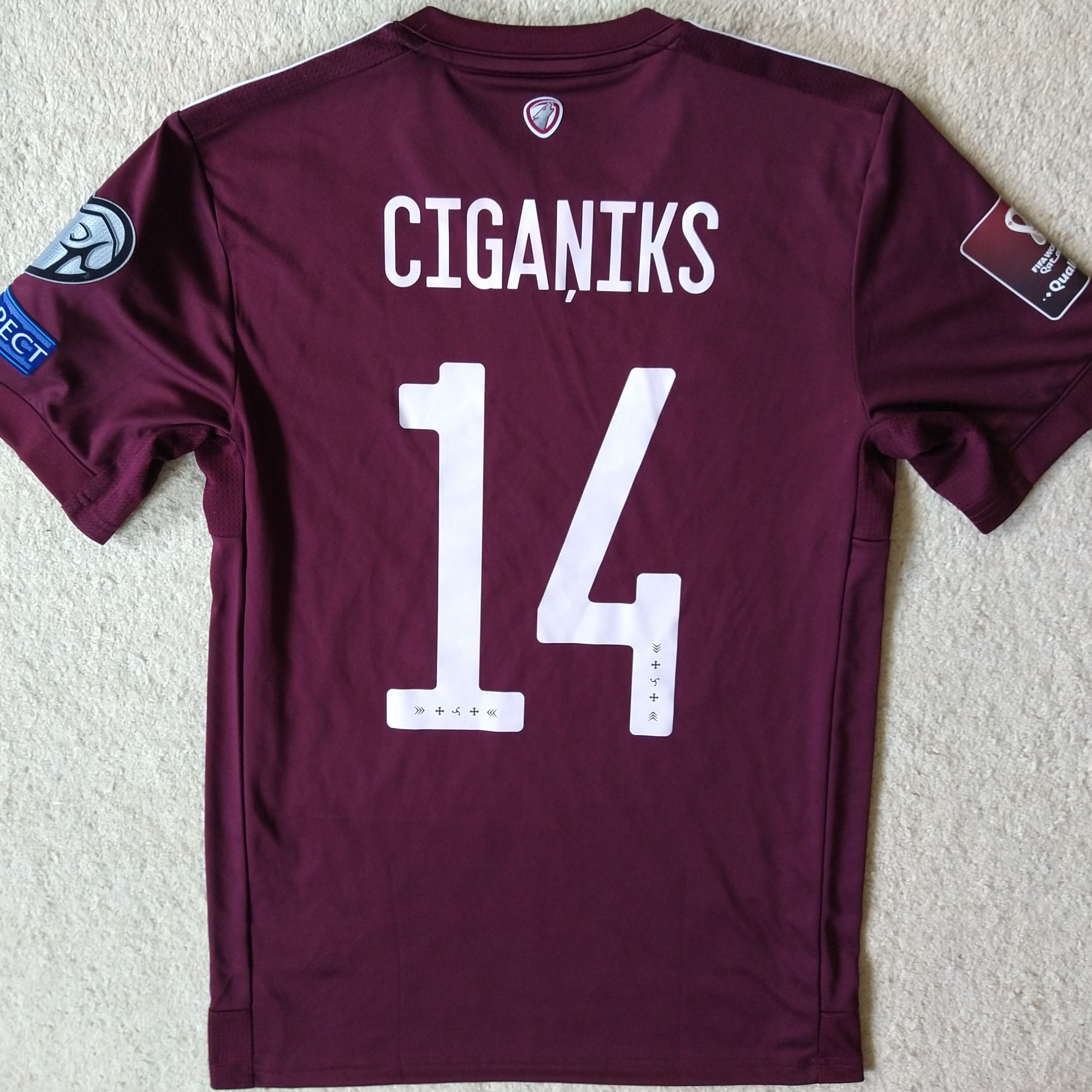
Latvia 2020-22 Home, matchworn by Andrejs Cigaņiks v ???
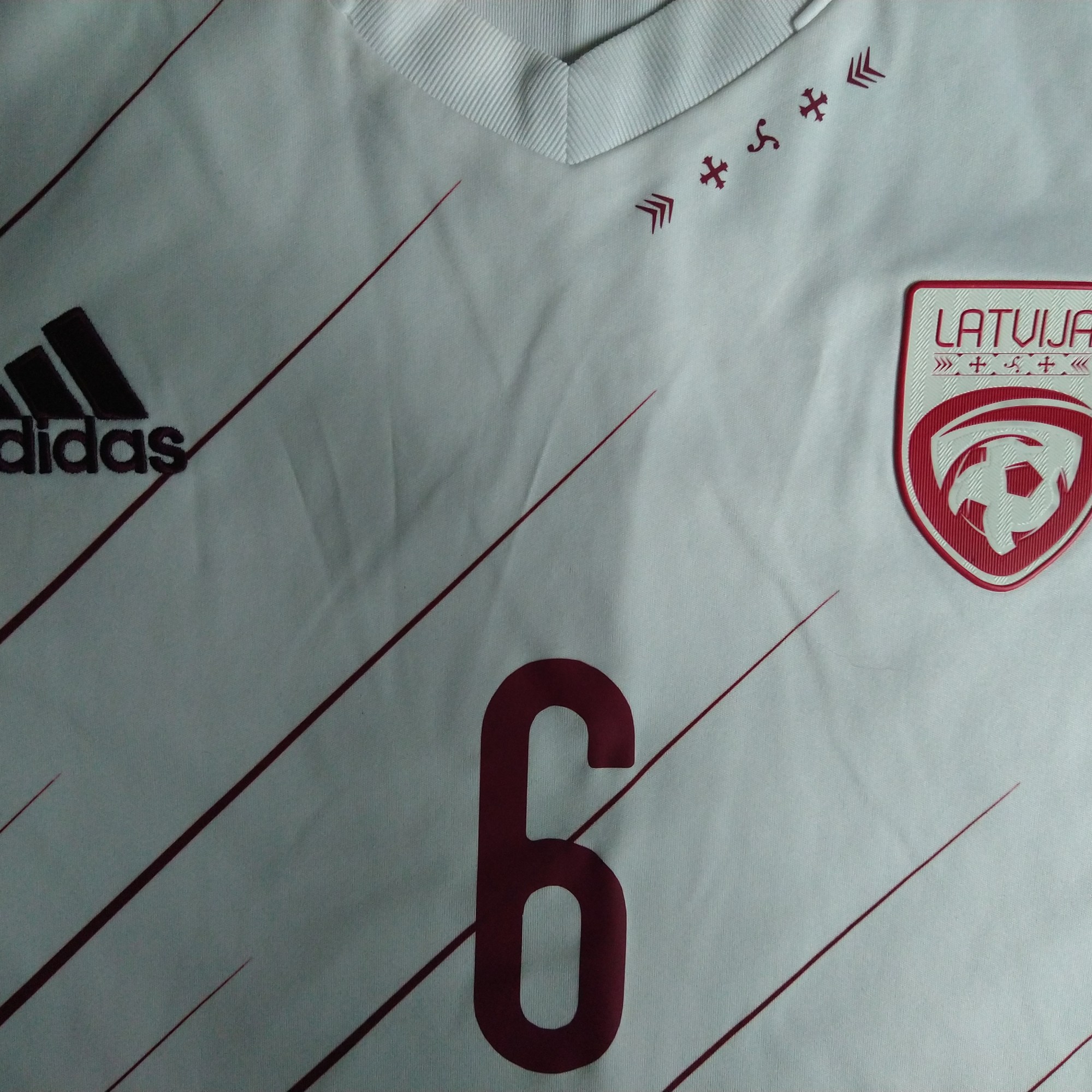
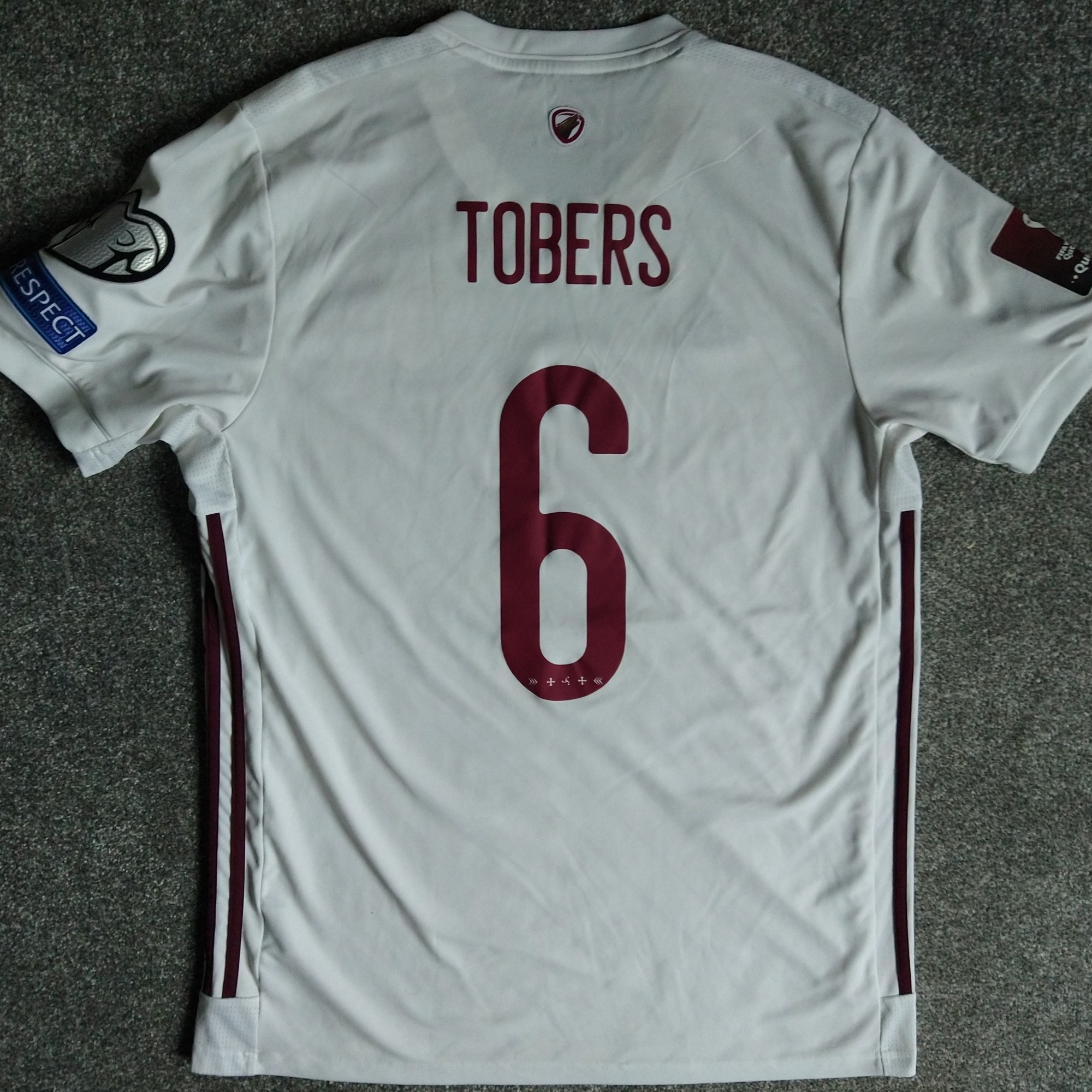
Latvia 2020-22 Away, matchworn by Kristers Tobers v ???
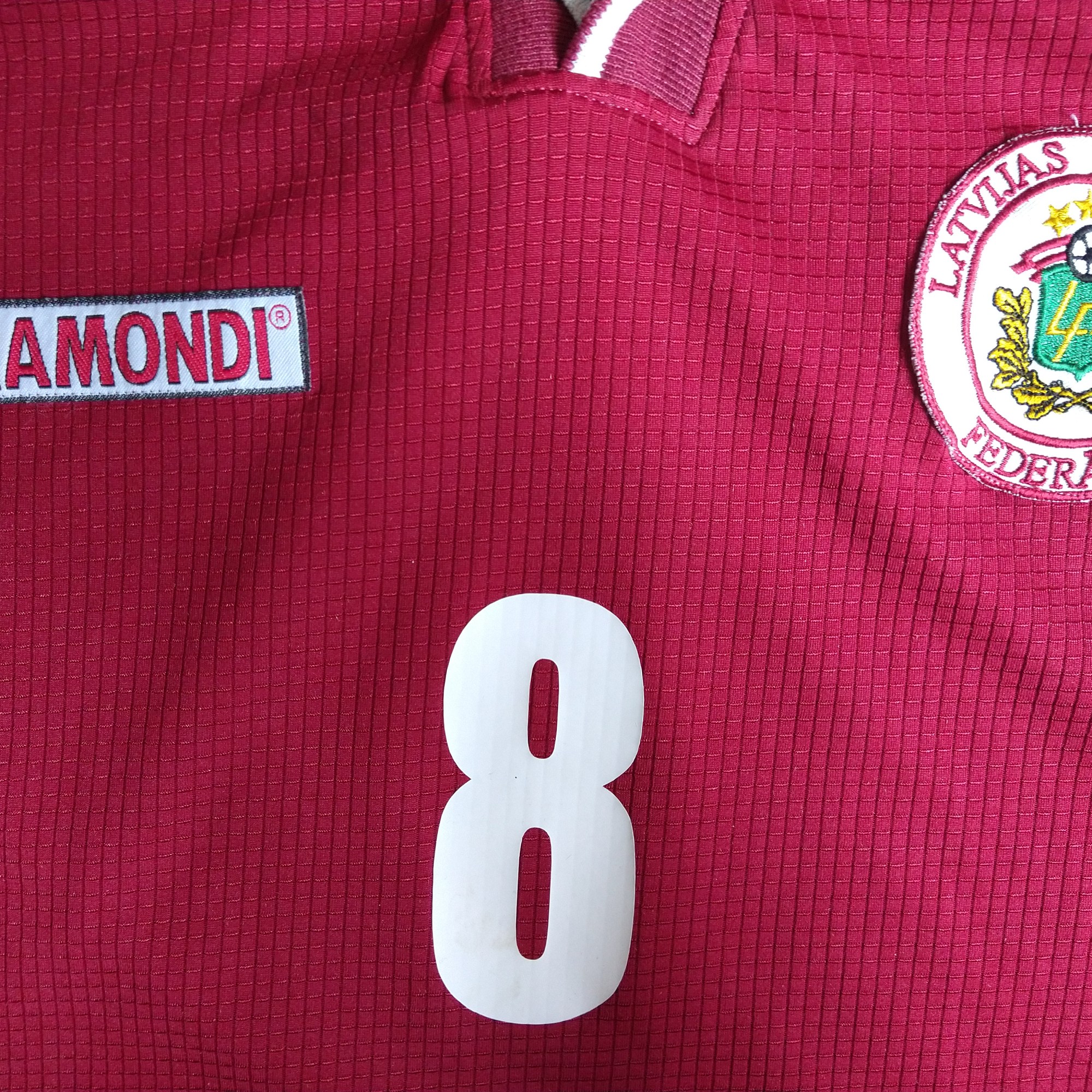
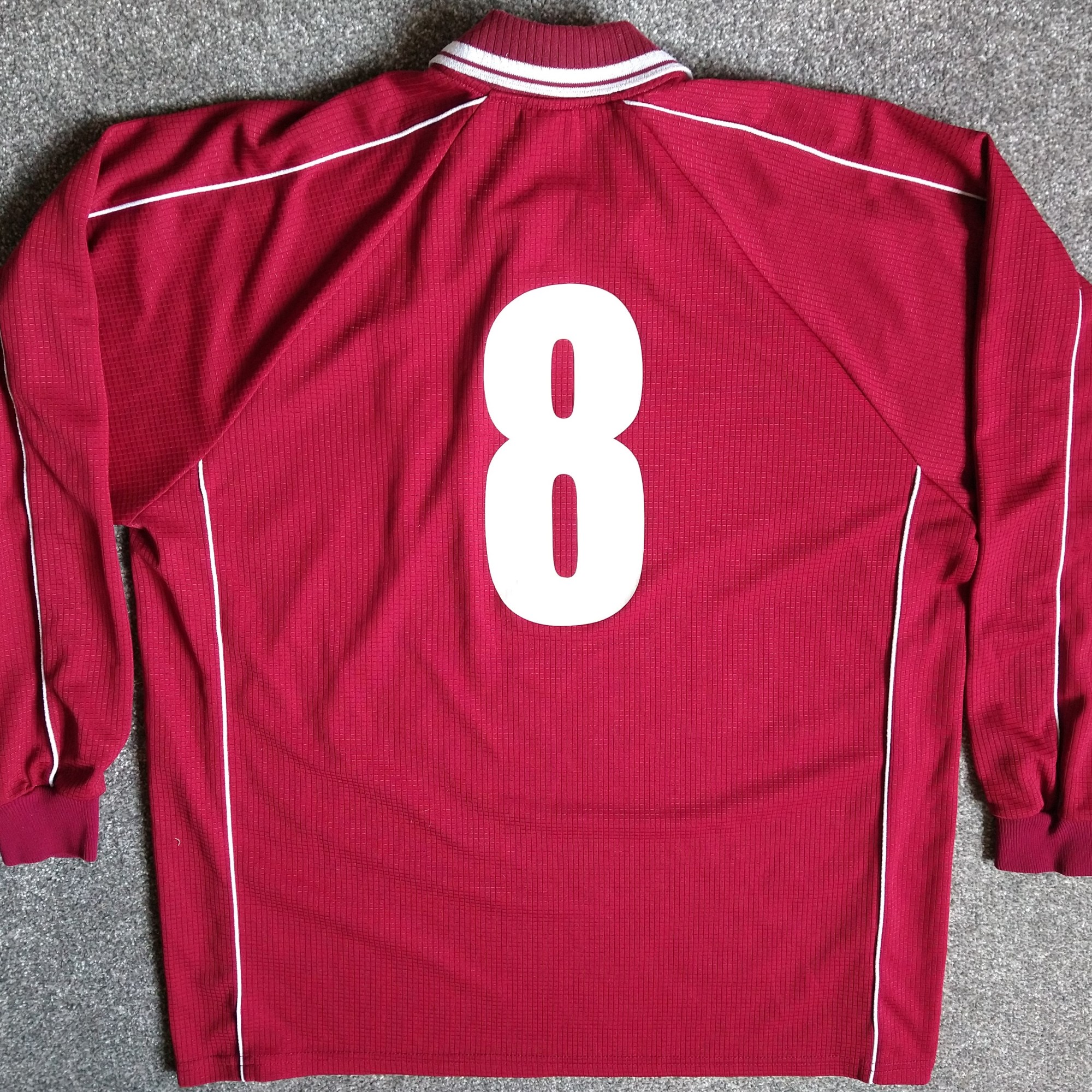
Tramondi aren’t a brand you often hear about, possibly because in the national game they only supplied Latvia for 2 years and then disappeared. The collar and sleeve cuffs are nice material while the material of the shirt is alright too. But, aside from some white trim, there isn’t a lot else to it. The logos are also quite solid for what they are and overall it ends up fairly basic. The Latvian maroon colour is probably the best part of the shirt, at least making it interesting.
2002 World Cup qualifiers failed to bring much joy for Latvia. While they had some close matches and scored in every away game, they finished 5th from 6 teams. Home and away losses to Croatia, Belgium and Scotland meant their only points opportunity was San Marino. A narrow 1-0 away win gave them most of their points, but a 1-1 home draw was not good enough. This left them with the lowest points total of any 5th placed team in UEFA.
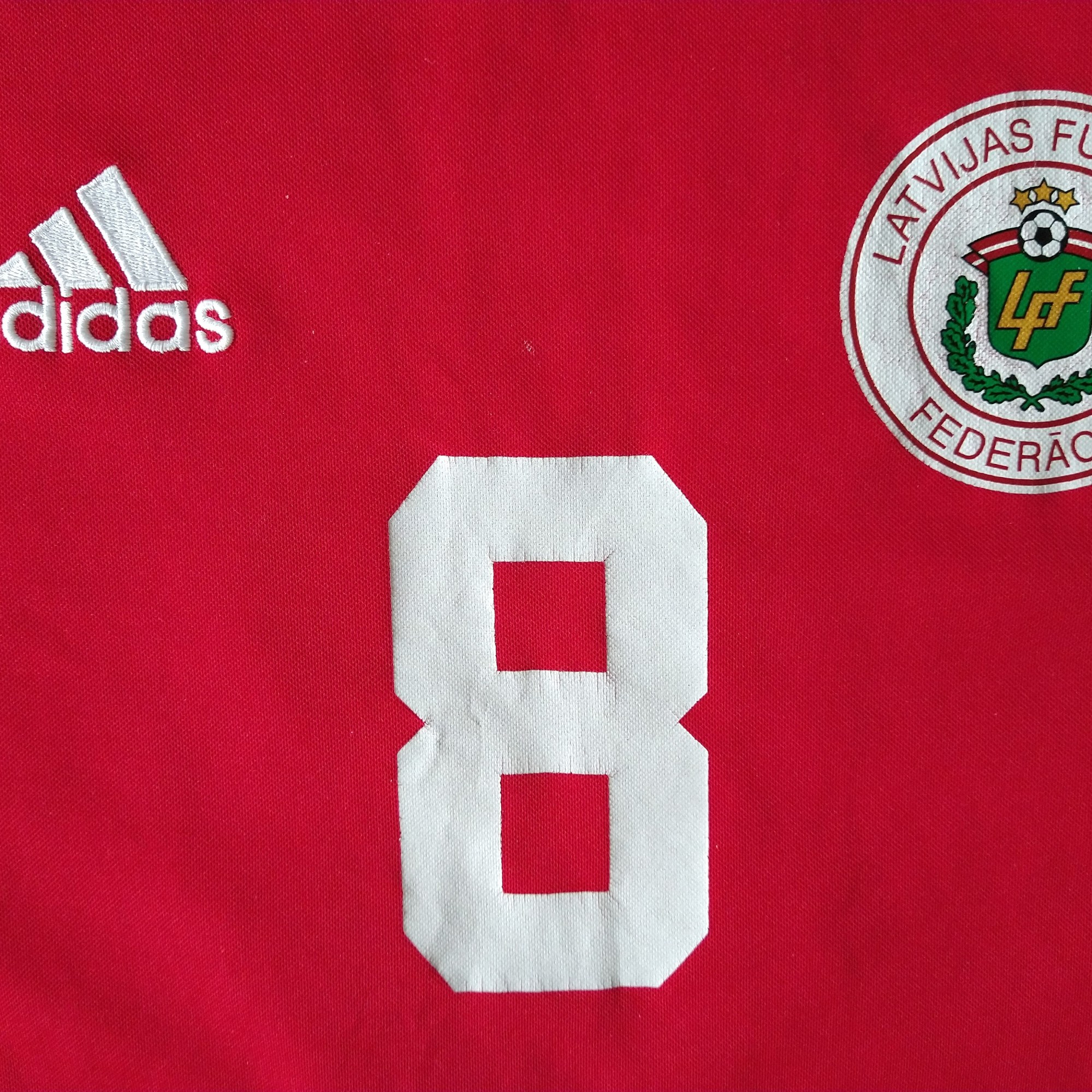
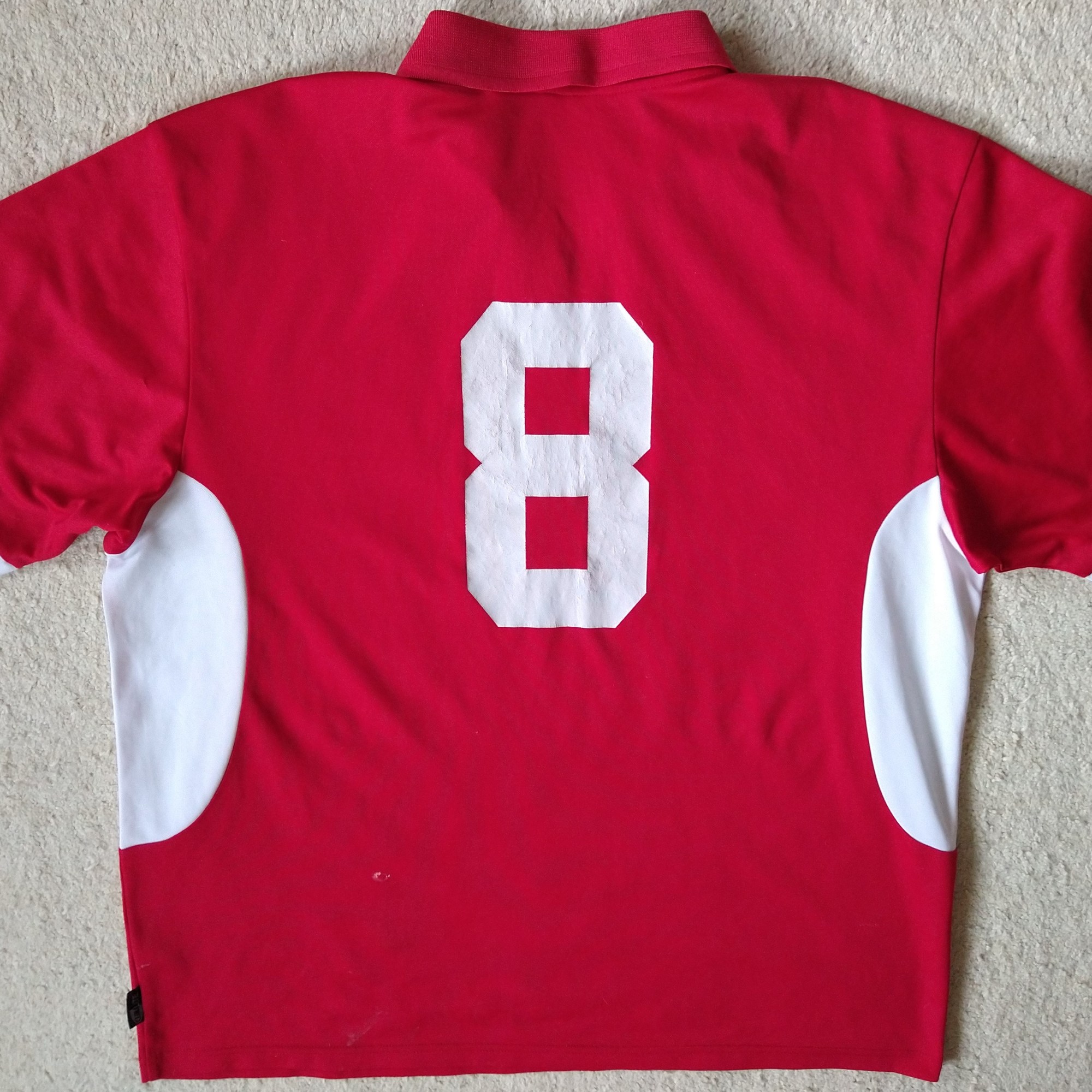
Then there’s one of my least favourite Latvia shirts, because the colour is too red. Maroon is the colour of Latvia, where’s it gone here? There’s some white down the sides and on the front of the collar which adds a little, but the strange one is the white sleeve cuffs with the classic Adidas stripes across only that! Almost like they were ashamed to associate themselves with it, and perhaps they should’ve been. The white badge is also a strange one, typically the maroon outline is nicer.
It may not be a great shirt, but it will always be iconic, for it was used across their Euro 2004 qualifiers. Drawn in a group with Sweden, Poland, Hungary and San Marino they shocked everyone by reaching the play-offs! Defeating San Marino home and away would have been expected, trading wins with Poland and Hungary was more of a surprise. A 0-0 home draw and 1-0 away win against Sweden were the pick of the bunch though to leave them 1 point off top spot and 3 ahead of Poland in 3rd. A 1-0 home win followed by a 2-2 away draw against Turkey in the play-offs sent them to their debut Euros!
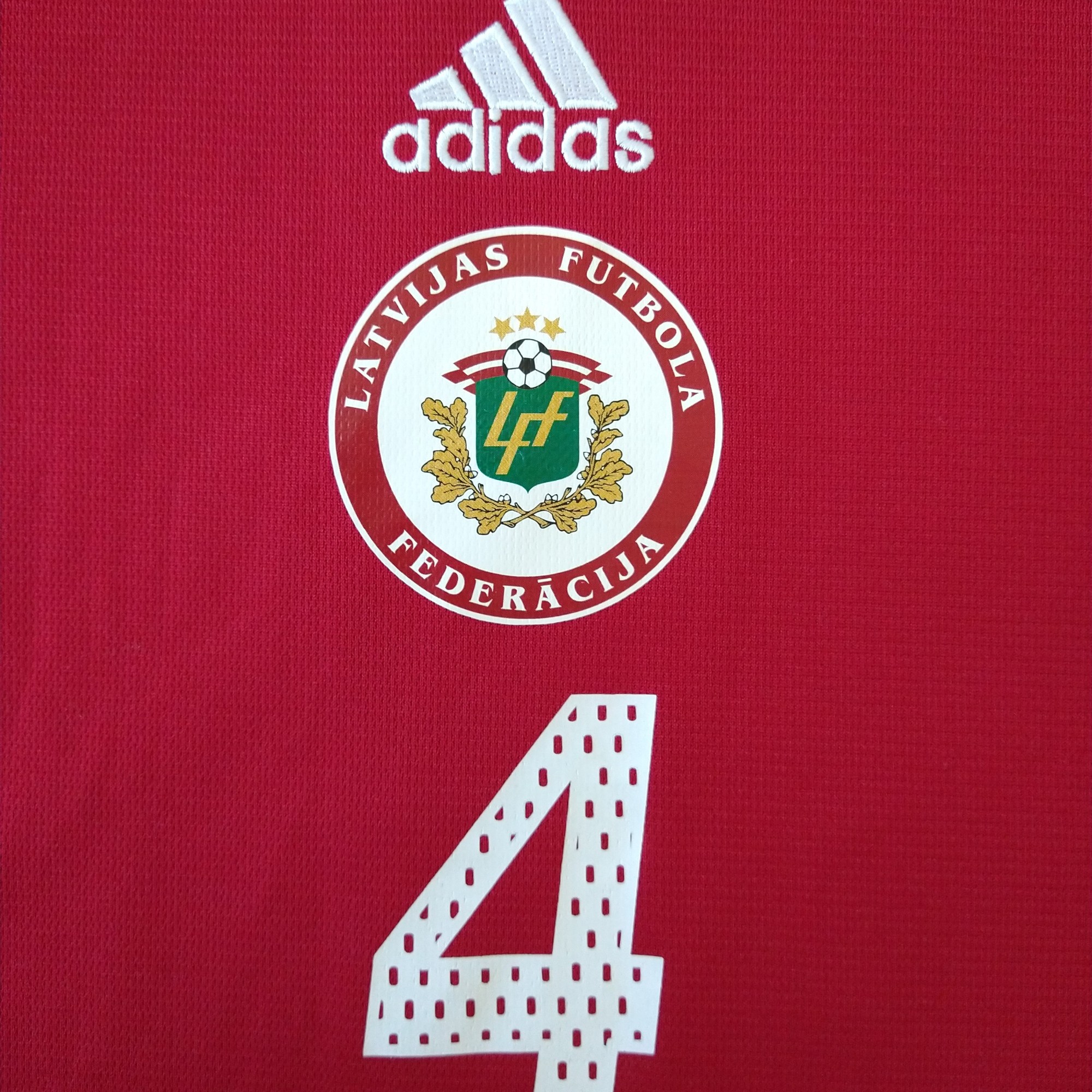
Next up is the rarest thing in the world: an intact 2006 World Cup qualifying patch! We’re back to the right colour for Latvia, with the deep maroon, and the Adidas stripes return to being across the sleeves. The white accenting now comes in the form of curved stripes on the front of the sleeves and the rear of the shirt. The badge returns to the correct colour scheme, though the logos and number are all centred, which leaves a bit too much clear space perhaps? A better shirt, but great is still somewhere far off in the distance.
The design is the other iconic design, being seen at Euro 2004 and across 2006 World Cup qualifiers. In Euro 2004 they lost 2-1 and 3-0 to Czechia and the Netherlands, who both went onto the semi-finals, and managed a 0-0 draw with Germany to register points in their debut! In 2006 World Cup qualifiers they beat Liechtenstein and Luxembourg and lost to Portugal home and away. Sadly, home draws against Slovakia, Russia and Estonia were followed up with away losses and they finished 5th from 7, 2 points behind Estonia but 7 points ahead of Liechtenstein (and 8 off play-offs).
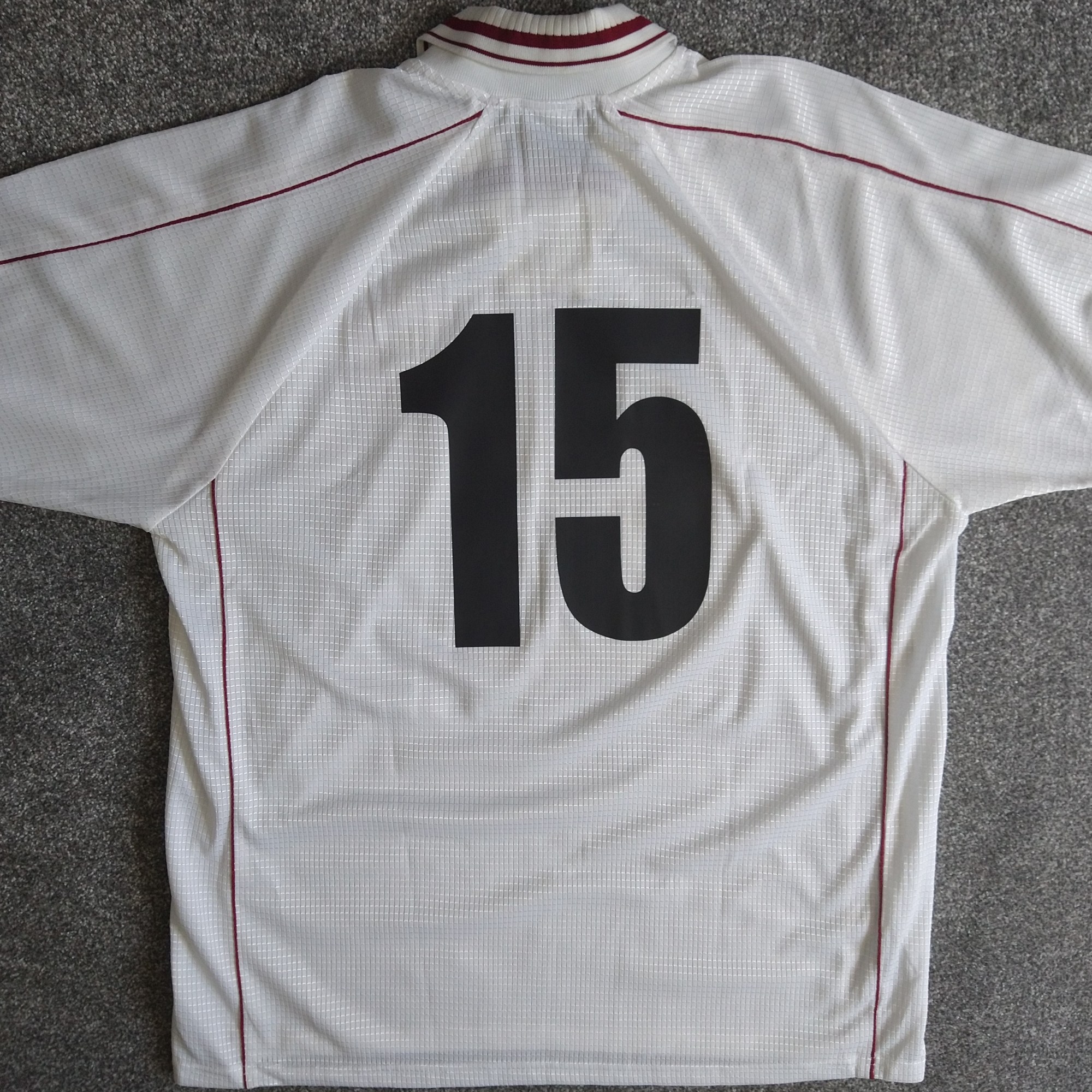
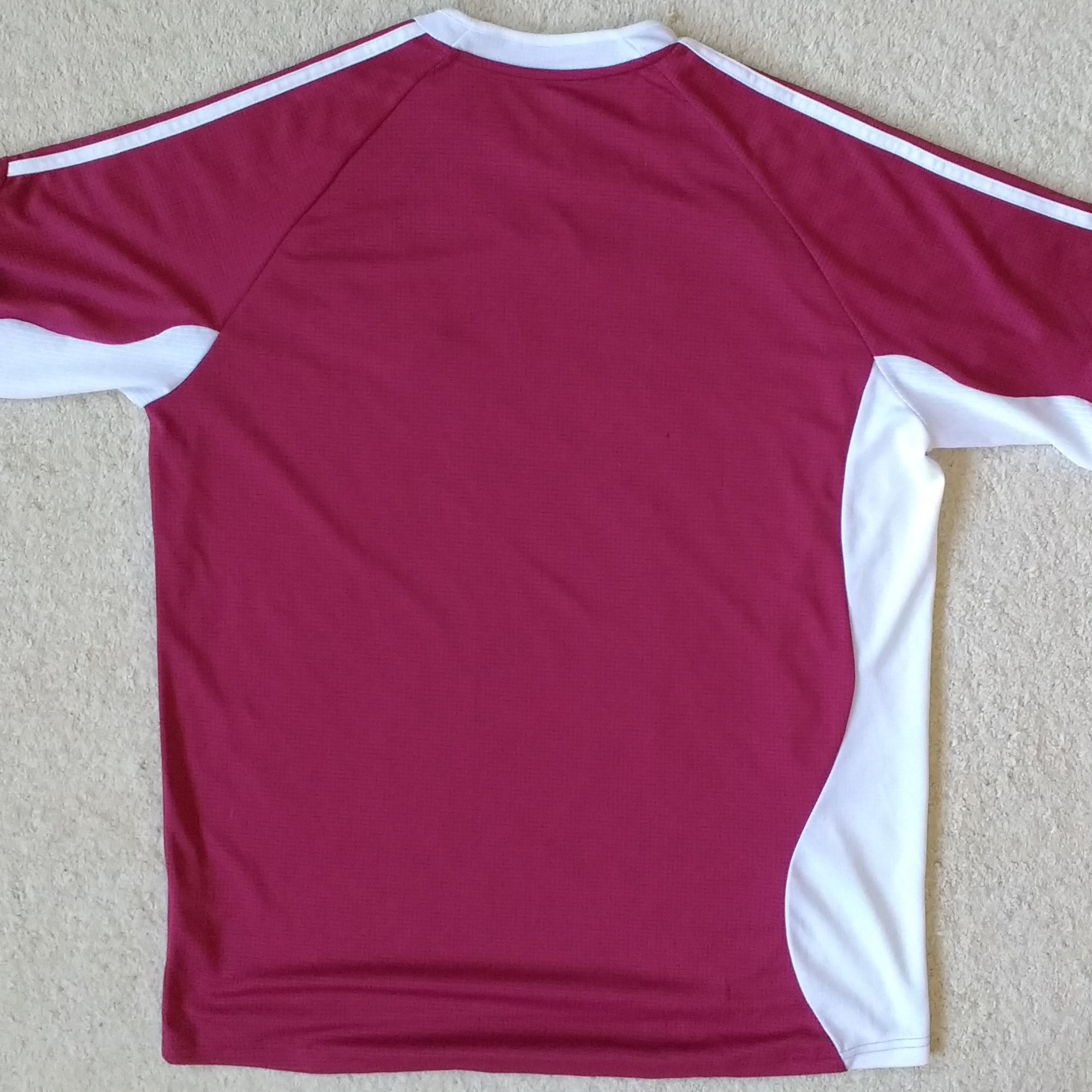
Replica Latvia shirts have embroidered badges and the detail to it makes it look very nice on the shirt. The material of the shirt is also interesting, with the shirt material being a grid pattern across the entire shirt. The strangeness comes from the asymmetry with the white collar melting down the right shoulder and all the way down the right side. It definitely looks a little strange, but it is certainly eye-catching.
Used across Euro 2008 qualifiers, Latvia finished 5th from 7 teams in their group. They lost home and away to Denmark, Spain and Sweden, as expected. However, they traded 1-0 wins with Northern Ireland. Sadly, they lost 1-0 away in Liechtenstein, but did win 4-1 at home. The highlight of the qualifiers were their humiliations of Iceland, beating them 4-0 at home and 4-2 away to finish 4 points clear of them, but 8 short of 4th place.
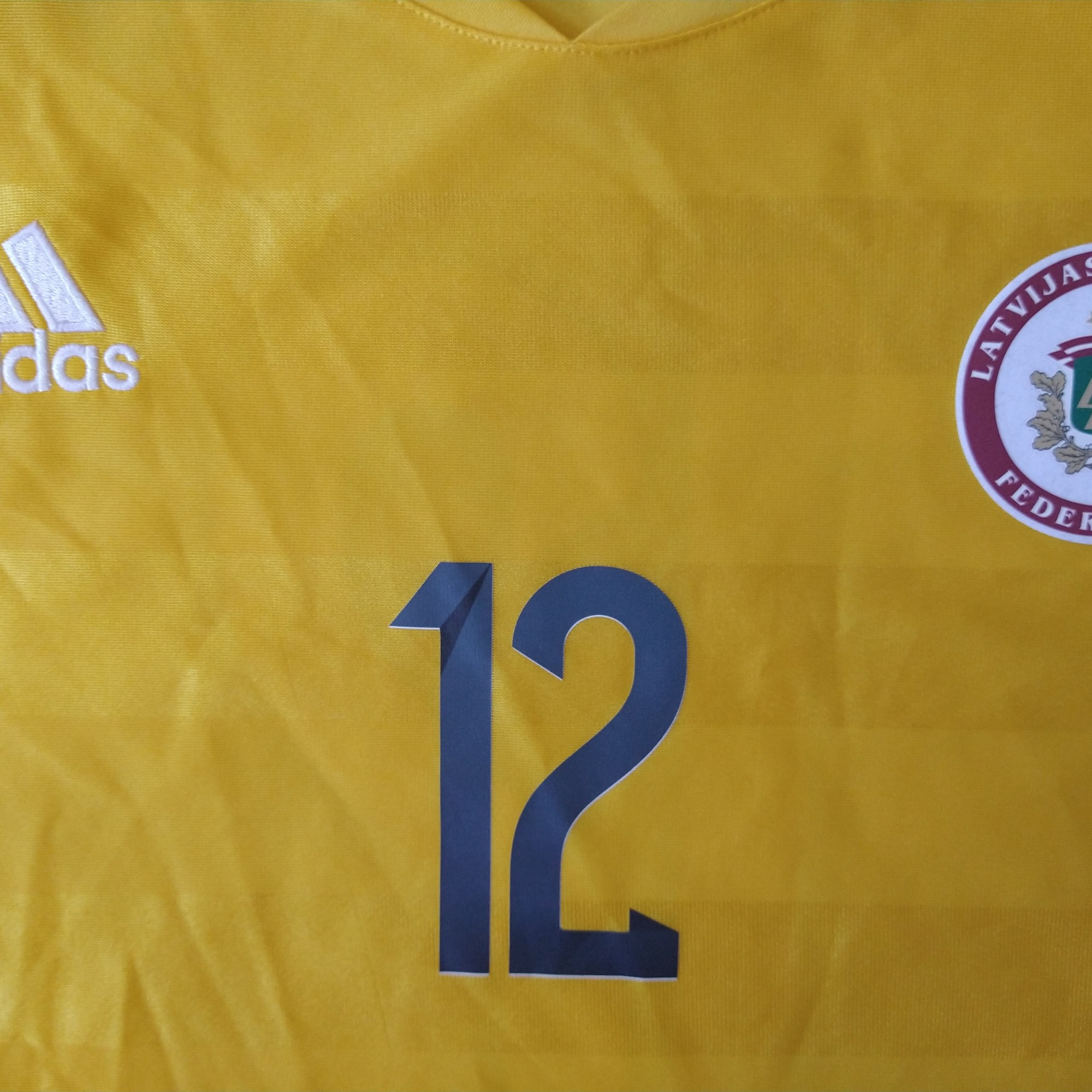
Next up, a gold goalkeeper shirt! Subtle horizontal stripes across the front help remove any thoughts of plainness along with the interesting gradient effect on the numbers. There’s a slight white trim on the inside of the hem and sleeve cuffs along with the start of the sleeves, as well as the traditional Adidas stripes. Other than that, not much to it, no pattern on the rear of the shirt but a nice (albeit small) non-transfer badge.
Though this shirt was prepped for a Euro 2016 qualifier, where the #1 used a different kit (oh Latvia), this design saw use across 2014 World Cup qualifiers. They were in a group with Bosnia-Herzegovina, Greece, Slovakia, Lithuania and Liechtenstein, losing home and away to the top two of Bosnia-Herzegovina and Greece. However, they managed a home draw against Slovakia and traded wins with their fellow Baltic nation. The flaw in their campaign came in their away draw to Liechtenstein, though they managed to win at home. They finished in 5th, 3 points short of Lithuania and 6 ahead of Liechtenstein, though they’ll have hoped for more.
Latvia’s latest shirt is superb: bold stripes across the shoulders, a slightly lighter, digital camouflage effect across the front, an updated FA badge and detailing under the collar and at the back. The classic deep maroon colour is beautiful, though it could perhaps benefit from a little more detail on the rear of the shirt. Really well put together and a big improvement on some of their recent home shirts, for sure. The away mixes things up with the Adidas stripes down the sides and two backgammon patterns angled across the front to mix things up a bit. Two very decent kits for a nation who so often have had templates.
Used across the 2020-21 Nations League (and so far across 2022 World Cup qualifiers) , Latvia struggled in League D. In a group with the Faroes, Malta and Andorra they drew 4 of their first 5 games, with their only win coming against Andorra in their final game, though it was then 5-0. They showed that they could get results but fell short, finishing in 3rd. They’ll be expected to do better next season, but their failure to get promoted will be a concern.
Typically the men’s senior team has done reasonably well in their qualifiers, with the spectacular Euro 2004 qualification and them coming within 3 points of a play-off spot for 2010 World Cup qualifiers. Until 2016 qualifiers they’ve always won at least 3 games in Euro qualification. However, they have tended to be nearer the bottom of their qualification groups than the top and have deteriorated since 2012 with only 5 wins from 4 qualification campaigns. This is highlighted by their Nations League performances where they have finished 3rd in League D twice, winning only a single game and drawing 8 times. A spectacular run of 4 consecutive Baltic Cups from 2012-2018 allowed them to retake their title lead off Lithuania, with 13 titles (to Lithuania’s 10) from 27 cups but they shockingly lost the 2021 title to Estonia. As with the other Baltic nations they were at the 1924 Olympics, getting thrashed 7-0 by France and they beat Lithuania but lost to Austria to fail to qualify for the 1938 World Cup.
On the women’s side Latvia fall far shorter, sadly. They first tried to qualify for Euro 1995, but their 4 losses discouraged them so much that they next showed up in Euro 2009 qualifying! They tried to qualify for every Euros since and the 2015 and 2019 World Cups. They were in every preliminary qualifying round, except for Euro 2022 qualifiers which didn’t have one, but have only come within 2 points of qualifying for the main group stages twice (2017 and 2019). They lost every game in Euro 2022 qualifiers. Winning all three Baltic Cups from 2017-19 bolsters their stats but they remain the lowest placed Baltic nation in the standings after Lithuania’s 2021 win. Onto men’s youth football, the U21s had a brief peak with senior team, registering several double figure qualifying campaigns but have since fallen into obscurity, fighting at the very bottom. The U19s have reached the elite round 3 times, missing out on the 2018 Euros on goal difference alone, but typically do poorly. The U17s have reached the elite round twice, doing similarly. All three youth teams hold the record number of titles in the youth Baltic Cups though, proving their dominance back home. At women’s youth level they’ve beaten Armenia, Georgia and Estonia but goals and points are rare to come by and they’ve never troubled the teams that reach the elite rounds.
They’ve not participated in the Euro Beach Soccer League to date but Latvia have been semi-active in the UEFA World Cup qualifiers. They’ve won once, against the Netherlands but in one of the most ridiculous formats ever, have actually been to the Round of 16 twice, when 2019 saw every team from groups D and E qualify. Spain annihilated them 14-2. Futsal has proven more fruitful, with Latvia being good enough to make the main qualifying round, though not good enough to do well there and prevent them having to start in the preliminary round. Stuck in the middle of development, they’re yet to progress further. Back in the Baltics though, they’ve won 7 of the 9 tournaments, falling to invitees Finland once and Lithuania another time.
In a group with Turkey, Netherlands, Montenegro, Norway and Gibraltar they were only really expected to compete for second-last, a position they would comfortably take, even pressing Montenegro for 4th. Their matches were all tight, losing at most by 2 goals, and they grabbed 3 away draws against Norway, Montenegro and Turkey (at 3-3, initially preserving their unbeaten record against them technically stretching back to 1924, though they’d later lose this). A good performance, hopefully one to build on.




Kyrgyz Republic 2006 Home


 Adam's National Shirt Collection